Cheapest Car Insurance for Rideshare Drivers


- Travelers has the cheapest car insurance for most rideshare drivers.
- Rideshare insurance protects you when you drive for a service like Uber, Lyft or DoorDash.
- The insurance these services provide isn’t always enough.
- Adding rideshare coverage to your car insurance costs about $30 a month.
Cheapest companies for rideshare insurance
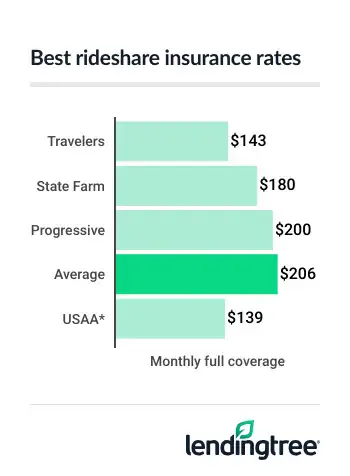
Travelers offers the cheapest rideshare insurance for a typical driver. It charges an average of $143 a month for full coverage with a rideshare endorsement.
USAA is actually cheaper than Travelers, but it’s only available to the military community.
Cheap rideshare insurance
| Company | Monthly rate | LendingTree score | |
|---|---|---|---|
 | Travelers | $143 |  |
 | State Farm | $180 | |
 | Progressive | $200 |  |
 | Mercury | $239 |  |
 | Allstate | $255 |  |
 | AAA | $284 |  |
 | USAA* | $139 | |
Travelers doesn’t offer rideshare coverage in California and some other states, but State Farm and Progressive also have cheap rideshare insurance.
Each company’s rates vary by customer, so it’s smart to compare car insurance quotes from a few companies to find the cheapest for your situation.
What is rideshare insurance?
Rideshare insurance fills a coverage gap when you drive for a transportation network like Uber, Lyft or DoorDash.
It mostly pays for car repair expenses that the transportation network company’s insurance doesn’t cover. It also extends other protections in your personal policy to rideshare activities.
Personal car insurance policies don’t normally include business activities, like taking passengers or deliveries. But some companies offer rideshare coverage as an “endorsement,” or optional add-on.
While your own insurance might not cover you once you turn on your app to accept rides or orders, the transportation network you’re working for usually gives you some coverage—but only some.
For example, the transportation network’s insurance usually doesn’t cover damage to your own car until you actually accept a ride. But if you add a rideshare endorsement to your personal car insurance, you will have this collision coverage
How much does rideshare insurance cost?
Rideshare insurance adds an average of $31 a month to a full coverage policy. The rate varies by company and location, ranging from less than $10 a month to more than $40.
Unfortunately, affordable rideshare insurance can be hard to find. Some companies don’t offer it, and others might have it but charge a lot more for the base policy than what you’re paying now. For this reason, try to get multiple insurance quotes to help find a reasonable rate.
How does rideshare insurance work?
Transportation network companies usually give you liability coverage
Rideshare insurance extends most of your personal car insurance coverage to rideshare driving. The biggest benefit is protection for your own car, as long as you have collision coverage on your personal policy.
A rideshare endorsement usually covers damage to your car while you’re waiting to pick up a ride. It can also cover your deductible for accidents that occur when you’re picking up passengers or have them in your car.
Rideshare endorsements also typically keep other coverages from your personal policy active while you’re rideshare driving. These can include uninsured motorist
What does the network’s insurance already cover?
How much coverage you get from your transportation network’s insurance depends on what you were doing when the accident happened.
For example:
- Uber and Lyft give you some liability protection while you’re waiting to accept a ride.
-
They give you even more liability protection from the time you accept the ride until you drop off. They also cover damage to your car during this period, but you’re responsible for a $2,500 deductible.
Your deductible is your share of repair costs for a collision or comp claim. Your insurance company pays the rest.
Rideshare insurance coverages
| Rideshare period | Uber/Lyft insurance covers… | Your rideshare insurance covers… |
|---|---|---|
| Accepting rides with app on |
| Damage to your own car* |
| Picking up and transporting passengers |
| Your deductible for car repairs |
DoorDash also provides liability coverage once you accept a delivery job from its network. However, its insurance usually doesn’t cover damage to your vehicle before or after you accept the job.
In some states, Lyft, Uber and/or DoorDash also offer uninsured motorist coverage
When is rideshare insurance worth it?
Worth it
Rideshare coverage is usually worth it if you drive your own vehicle for a transportation network. No one can predict when an accident could happen, and that rideshare endorsement could save you a lot of money.
Not worth it
Rideshare coverage may not be worth the cost if you have an older car with a low resale value.
- If your car is worth less than a few thousand dollars, you may not even need collision coverage on your personal policy.
- In this situation, the liability coverage the rideshare company provides may be all you need. Just be mindful that the rideshare company’s liability insurance doesn’t cover your injuries.
A commercial auto insurance policy may be a better choice than a rideshare endorsement in some situations. For example, you usually need a commercial policy to drive for Uber Black.
How to get rideshare insurance
Make sure to let your current insurance company know when you start driving for a rideshare company.
- Your insurance company can give you a quote for rideshare insurance, if they offer it.
- You can also find out if your current insurance companies have restrictions on rideshare driving. If they do, you may need to switch companies.
Which car insurance companies offer rideshare insurance?
Some of the better-known companies for rideshare insurance quotes include:
Although each of these companies have rideshare insurance, they may not offer it in every state. Some regional companies like Mercury, NJM and Plymouth Rock also offer rideshare coverage.
You can contact insurance companies directly for quotes, or use LendingTree to get multiple quotes at once by clicking below.
Frequently asked questions
You don’t have to get rideshare insurance to drive for Uber, but it can come in handy. The insurance Uber provides for drivers isn’t always enough. Adding rideshare coverage to your personal car insurance can give you more protection that you get from Uber alone.
Uber provides some insurance while you’re active. You can add rideshare coverage to your personal car insurance for protections Uber does not provide.
Progressive offers rideshare insurance in most states. You have to get your normal car insurance from Progressive to add it to your policy.
You usually only need minimum coverage car insurance to drive for a rideshare company. Most rideshare companies give you liability coverage while you’re driving for them or waiting for rides. However, their insurance doesn’t always cover damage to your own car. You can add collision and rideshare coverage to your personal car insurance to protect your car.
Methodology
LendingTree uses insurance rate data from Quadrant Information Services using publicly sourced insurance company filings. Rates are based on an analysis of car insurance quotes for typical drivers. Rideshare endorsement rates are based on quotes for drivers in California, Georgia and Illinois. Prices are shown for comparative purposes only. Your own rates may be different.
Unless noted otherwise, quotes are for a full coverage policy for a 30-year-old man with good credit and a clean driving record who drives a 2018 Honda CR-V EX.
Coverage limits
Rates for full coverage rideshare insurance policies include:
- Bodily injury liability: $50,000 per person, $100,000 per accident
- Property damage liability: $50,000
- Uninsured / underinsured motorist bodily injury: $50,000 per person and $100,000 per accident
- Personal injury protection: minimum limits, where required by law
- Collision: $500 deductible
- Comprehensive: $500 deductible
- Rideshare driver endorsement
How we evaluated car insurance companies
Our team of insurance experts rated insurance companies based on several categories. These categories include average rates, discounts, coverage options, third-party customer service ratings and app/website experience. We weighted these categories based on what customers value in an insurance company.
For third-party customer service ratings, we included Complaint Index scores from the National Association of Insurance Commissioners (NAIC) and financial strength ratings from AM Best. NAIC Complaint Index scores are used to determine how satisfied customers are with their claims, while financial strength ratings from AM Best reflect the ability to pay out claims.
Read our editorial guidelines here.
*USAA is only available to current and former members of the military as well as certain family members.