How Much Does Car Insurance Go Up After an Accident?


An at-fault accident can make your car insurance much more expensive. A typical driver’s annual full coverage car insurance can go up by 45% on average after an accident, a LendingTree study found.
Teen drivers often see the biggest rate increases because insurance companies already consider them higher-risk drivers.
Even so, shopping for insurance quotes after an accident may still help you find a better rate, since every insurance company calculates risk differently.
The extra cost of an at-fault accident can add up over time. According to a 2026 LendingTree study, drivers pay higher insurance rates for an average of three years after an accident, turning a one-year rate increase into thousands of dollars in added costs.
Car insurance rates after an accident
Car insurance rates can vary widely after an at-fault accident, so it’s wise to compare quotes before your policy renews. The companies below offer some of the lowest average rates for drivers with an at-fault accident on their records.
While you’re shopping, ask each insurer how long the accident will affect your premium, since that time frame can vary by company.
Cheapest car insurance after an accident
| Company | Average rate after an accident | LendingTree score | |
|---|---|---|---|
 | State Farm | $163 |  4.5/5 4.5/5 |
 | Country Financial | $182 |  5/5 5/5 |
 | Erie | $186 | 4.5/5 |
 | Travelers | $195 | 4.5/5 |
 | Auto-Owners | $209 | 5/5 |
 | American Family | $237 |  4/5 4/5 |
 | Progressive | $238 | 4/5 |
 | USAA** | $174 | 4/5 |
**USAA is only available to current and former members of the military as well as certain family members.
Car insurance rates for teens after an accident
Teen drivers often pay much more for car insurance after an at-fault accident because they already face some of the highest premiums. If you’re eligible, joining a parent’s policy can often cost much less than purchasing your own insurance as a teen.
Cheapest teen car insurance after an accident
| Company | Average rate after an accident* | LendingTree score | |
|---|---|---|---|
| Erie | $137 | 4.5/5 |
| Country Financial | $169 | 5/5 |
| State Farm | $193 | 4.5/5 |
| Auto-Owners | $251 | 5/5 |
 | Mercury | $253 |  3.5/5 3.5/5 |
 | Geico | $266 | 3.5/5 |
| Progressive | $274 | 4/5 |
| USAA** | $170 | 4/5 |
**USAA is only available to current and former members of the military as well as certain family members.
States where accidents cost the most
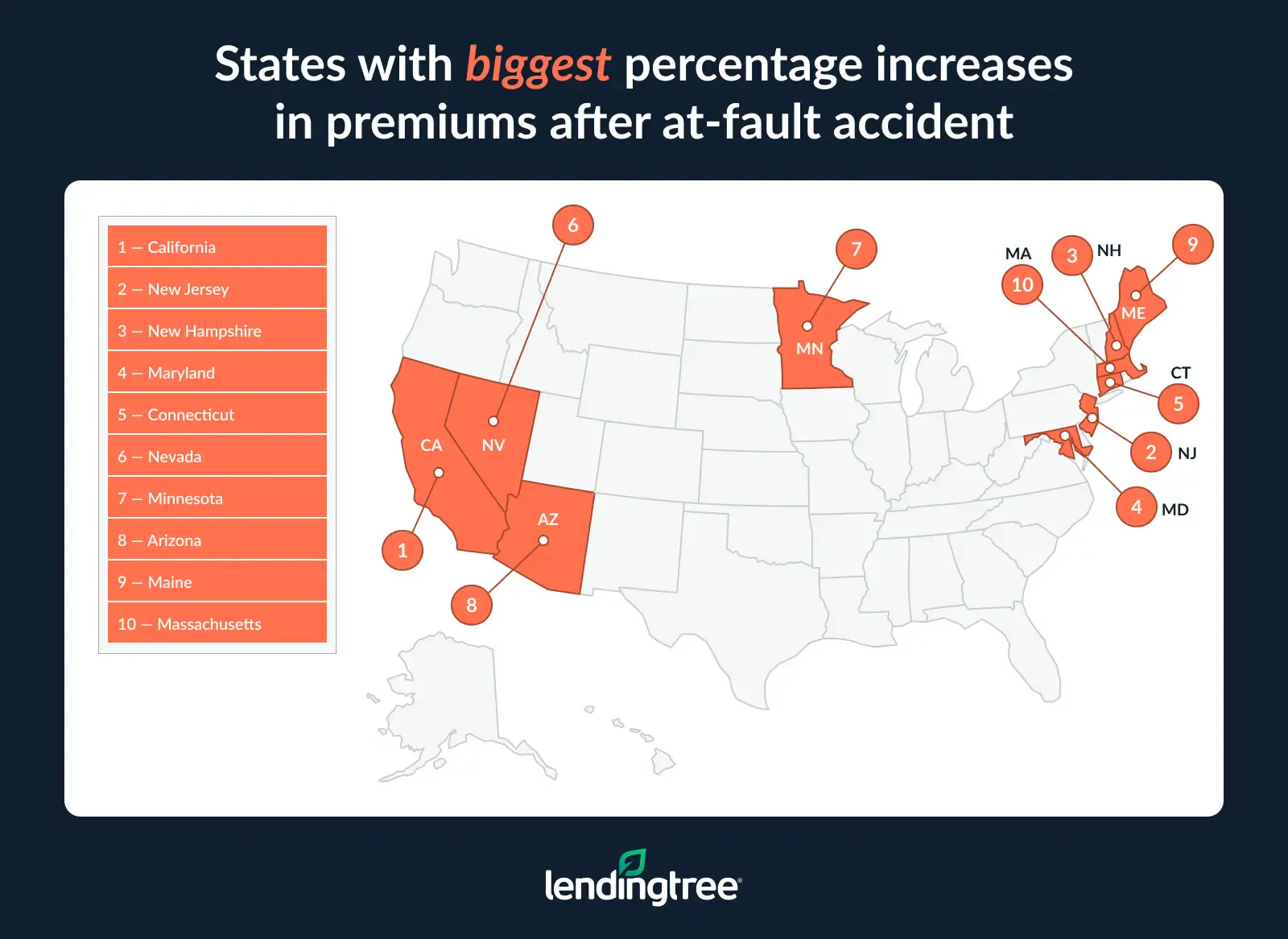
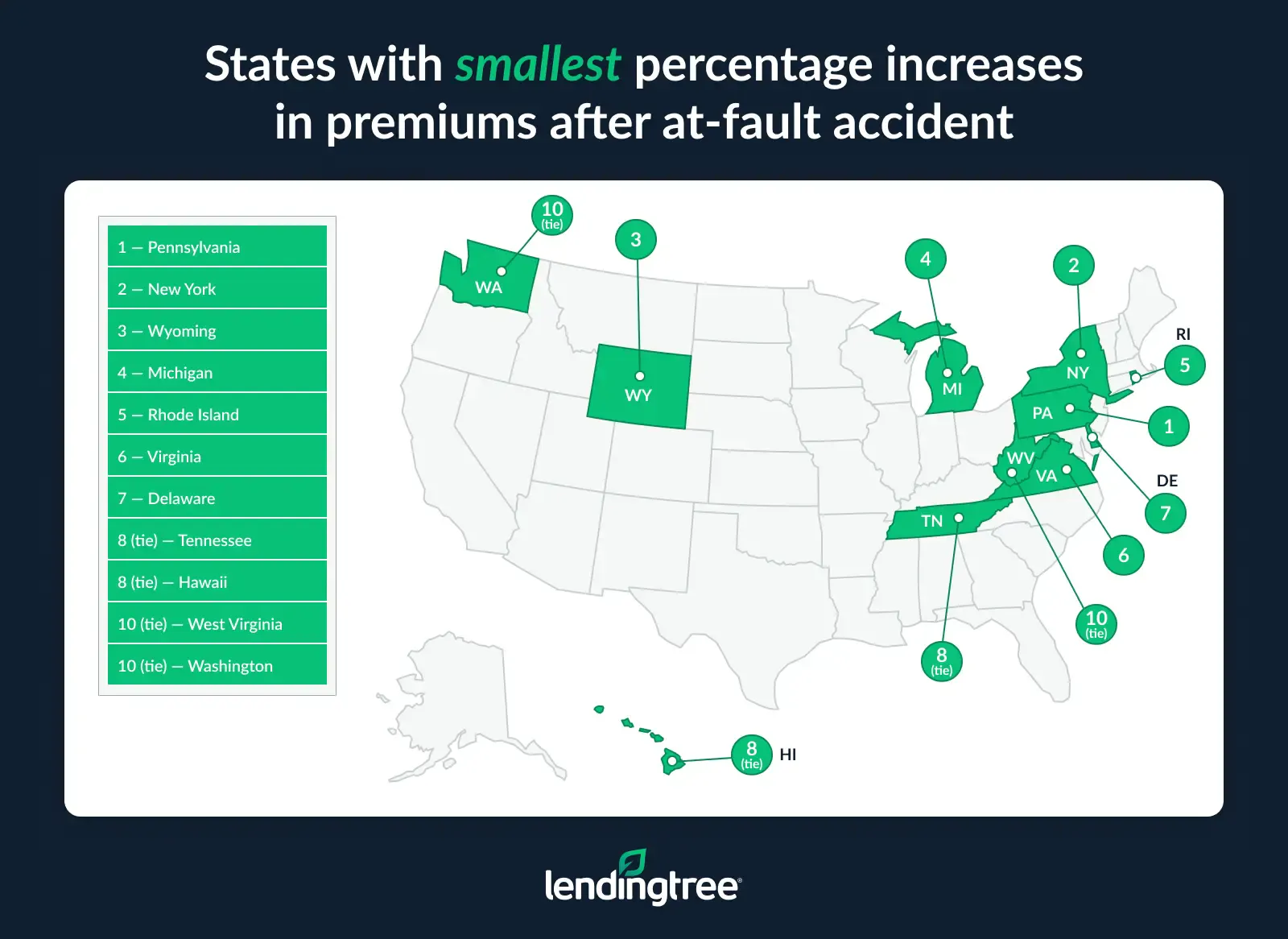
Where you live can have a big impact on how much an at-fault accident raises your car insurance premium. Each state has its own insurance regulations, and how much repairs cost and how insurers evaluate risk also varies from place to place.
According to LendingTree’s analysis, drivers in California see the biggest percentage increase after an at-fault accident, while Pennsylvania sees the smallest.
Meanwhile, Arizona drivers face the largest average increase after an at-fault accident, while drivers in Pennsylvania, Wyoming and North Carolina see the smallest.
Why do insurance rates go up after an accident?
Insurance companies consider drivers with an at-fault accident or traffic violation riskier to insure. To cover the cost of possible claims, they often add a surcharge to the premium.
Surcharges usually stay on your policy for three to five years. Keeping a clean driving record during that time can help you qualify for lower rates once the surcharge expires.
Will my insurance always go up after an accident?
Which types of accidents increase your insurance rates depends on both the state and insurance company. Rates usually go up the most after a serious at-fault accident, while a minor fender bender may have a smaller effect.
In New York, for example, insurance companies can’t add a surcharge for an at-fault accident involving $2,000 or less in injuries and damage. But they can apply a surcharge if you have two or more minor accidents within three years.
Rules for accidents where you’re not at fault also differ by state and insurance company. Some insurers may still raise your rates, while others won’t. In Ohio, insurers generally can’t increase your premium after a single no-fault accident during a policy period.
Liability and collision claims usually increase your insurance rates. However, claims under other types of coverage don’t automatically trigger rate increases.
Before you file a claim, ask your insurance company if it will raise your rate. Make it clear that you’re only asking about a possible claim. This approach can help you decide whether to move forward with filing or to just take care of any damages yourself.
See our guide to filing a claim for details.
Should I switch car insurance after an accident?
In general, it’s best to wait until you get your renewal notice before switching car insurance companies after an accident. Your insurance company usually can’t increase your rate until your next policy period begins. About a month before then, you should receive a renewal notice showing your new rate after the accident.
Once you know your new rate, compare quotes from other insurance companies. A prior accident is just one of several factors that can affect your rate. Others include your:
- Age and ZIP code
- Vehicle type
- Driving history
- Credit history
- Available discounts
How does accident forgiveness work?
Accident forgiveness is an optional car insurance feature that can keep your rates from going up after your first at-fault accident. Some insurance companies include it for qualifying drivers, while others offer it as an optional add-on product for an extra cost.
Eligibility and coverage options vary by insurer. For example, Progressive offers free “Small Accident Forgiveness” for eligible claims of $500 or less, along with “Large Accident Forgiveness” for qualifying long-term customers. Geico also offers free and optional accident forgiveness, depending on your policy and state.
Free accident forgiveness is a valuable perk if you qualify. Paying extra for it is a personal decision, but it could save you money if you have an at-fault accident in the future.
Frequently asked questions
The increase depends on the type of claim, your insurance company and where you live. In general, at-fault claims increase rates far more than claims for accidents you didn’t cause.
Accident forgiveness is one of the few ways to avoid a rate increase after an at-fault accident. If you cause a minor accident, paying for the damage yourself instead of filing a claim may also work.
Your insurance usually won’t go up if someone hits your parked car, but it depends on your insurance company and state. Before you file a claim, ask your insurer whether doing so could affect your rate.
If you get insurance after an accident, your new policy won’t cover the incident. Additionally, if you caused the accident, you’ll likely pay higher rates than you would have before the crash.
An at-fault accident usually stays on your insurance record for three to five years, although the exact time frame depends on your insurance company and state.
Methodology
LendingTree uses insurance rate data from Quadrant Information Services using publicly sourced insurance company filings. Rates are based on an analysis of hundreds of thousands of car insurance quotes for a typical driver. Prices are shown for comparative purposes only. Your own rates may be different.
Unless noted otherwise, quotes are for a full coverage policy for a 30-year-old man with good credit and one at-fault accident, who drives a 2018 Honda CR-V EX. Teen rates after an accident for an 18-year-old driver.
Coverage limits
Rates for full coverage rideshare insurance policies include:
- Bodily injury liability: $50,000 per person, $100,000 per accident
- Property damage liability: $50,000
- Uninsured/underinsured motorist bodily injury: $50,000 per person and $100,000 per accident
- Personal injury protection: minimum limits, where required by law
- Collision: $500 deductible
- Comprehensive: $500 deductible
How we evaluated car insurance companies
Our team of insurance experts rated insurance companies based on several categories. These categories include average rates, discounts, coverage options, third-party customer service ratings and app/website experience. We weighted these categories based on what customers value in an insurance company.
For third-party customer service ratings, we included Complaint Index scores from the National Association of Insurance Commissioners (NAIC) and financial strength ratings from AM Best. NAIC Complaint Index scores are used to determine how satisfied customers are with their claims, while financial strength ratings from AM Best reflect the ability to pay out claims.
See our car insurance ratings methodology and full editorial guidelines for further details.