Half of Americans Struggle to Afford Food, Changing How They Shop and Dine


Half of Americans are struggling to afford food, and food anxiety is a reality for the majority of people, according to LendingTree research. Six in 10 people have worried about paying for groceries in the past month. Younger generations, parents of young kids and people in low-income households experience this anxiety at disproportionately high rates.
Most people are changing how they shop for groceries (86%) and eat restaurant food (84%) to minimize costs, but dining frequency and cost-cutting measures differ by age and income. Together, these findings suggest that food is a widespread financial stressor for many Americans.
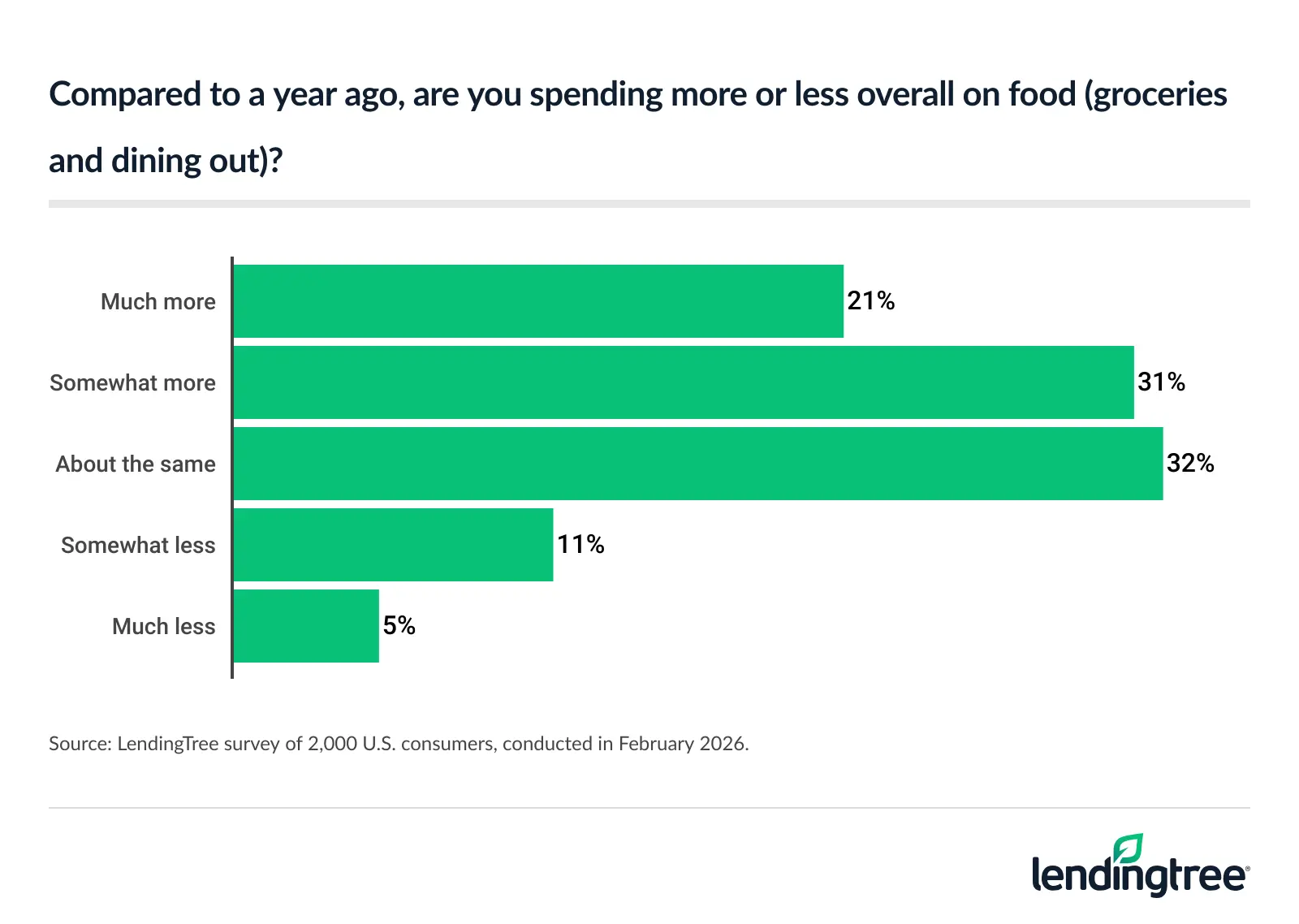
- Americans are struggling to pay for groceries as prices rise. More than half (52%) say they’re spending more on food than they were last year, and 49% say it’s at least somewhat difficult to afford food right now.
- Nearly 90% have changed how they shop for groceries to offset higher food prices. Common strategies include paying closer attention to grocery prices (30%), cutting back on “splurge” items (24%), being more mindful of food waste and leftovers (23%), and choosing store or generic brands (23%).
- About 4 in 10 Americans still eat out and order in at least once a week, but habits vary by generation and income. The more people earn, the more they order from restaurants — 90% of people from high-income households eat at restaurants at least occasionally. Meanwhile, baby boomers are far less likely to order takeout and delivery than other generations, with 43% saying they didn’t order out once in the past month.
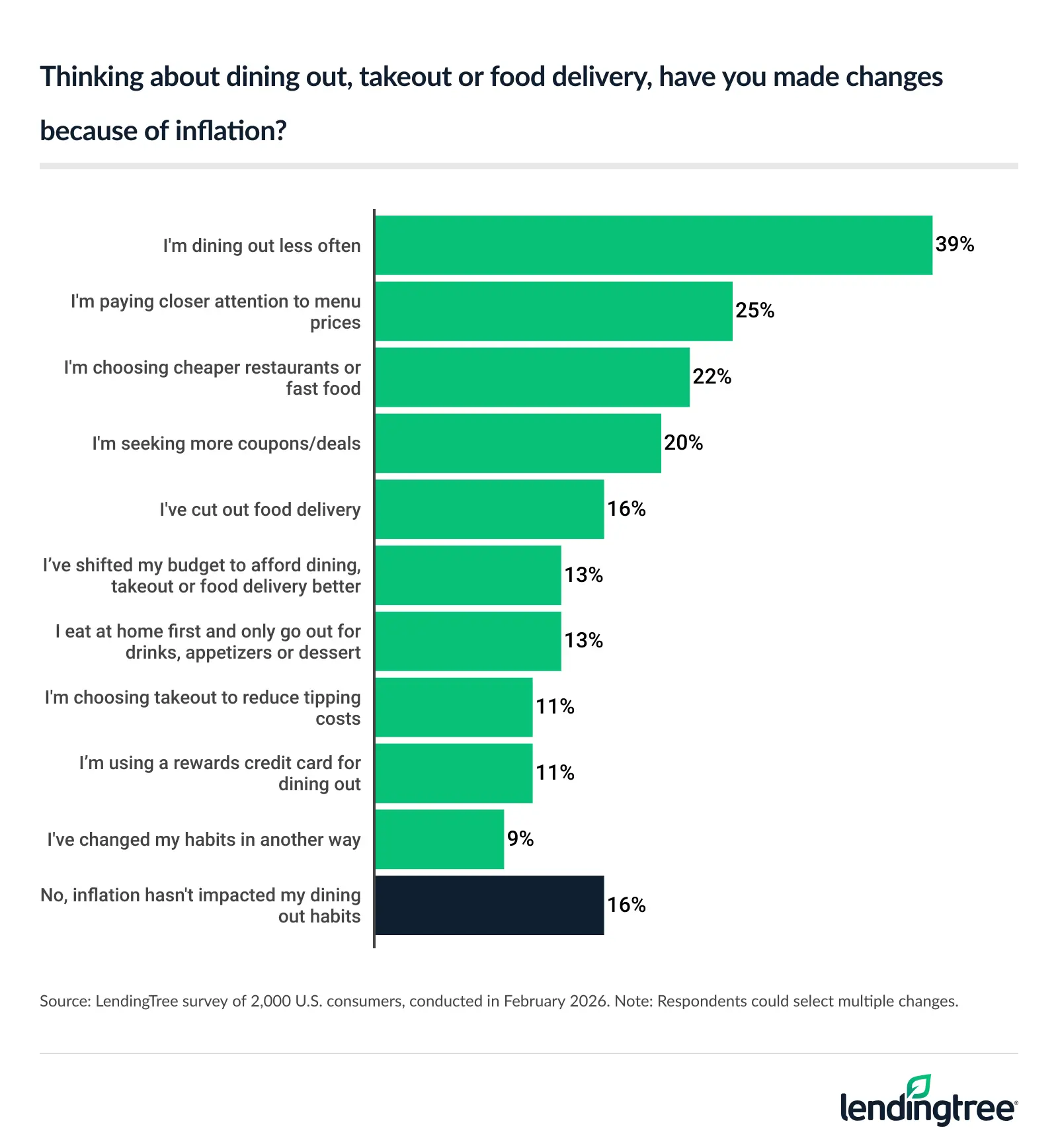
- A majority (84%) of people have cut back on restaurant spending to save money. They’re eating out less (39%), paying attention to menu prices (25%) and choosing cheaper restaurants or fast food (22%). A quarter (25%) say they’re tipping less.
Americans are struggling to pay for groceries as prices rise
Over half of Americans say they’re spending more on groceries and restaurants than they did last year, including 21% who say they’re spending much more. Young families are hit hardest — 66% report higher food spending this year.
People say it’s hard to afford food
Half of Americans (49%) say it’s hard to afford food, with just 22% reporting they have no difficulty affording food right now. An additional 30% say it’s not very difficult.
Certain groups feel the squeeze most — 19% of Gen Zers (ages 18 to 29), 18% of millennials (ages 30 to 45), 17% of parents of young kids and 22% of people in low-income (under $30,000) households report that affording food has become very difficult. Baby boomers (ages 62 to 80) are least likely to report hardship, with just 5% saying it’s very difficult to pay for food.
Food anxiety is mainstream
While half of America struggles to afford food, concern extends beyond people reporting difficulty. A majority are worried about affording food, with 11% reporting food anxiety almost always. Even people with household incomes above $100,000 are anxious — 57% report feeling concern about paying for groceries in the past month.
The same groups that have the most difficulty affording food are the most likely to report food anxiety, including 73% of millennials, 68% of Gen Zers, 73% of parents of young kids and 73% of people with low household incomes. Baby boomers have the lowest rates of anxiety, with 63% claiming they haven’t worried about affording food in the past month.
Nearly 90% have changed how they shop for groceries
A vast majority of people are using different strategies to cut back on grocery costs, with only 14% saying their shopping habits haven’t changed because of inflation.
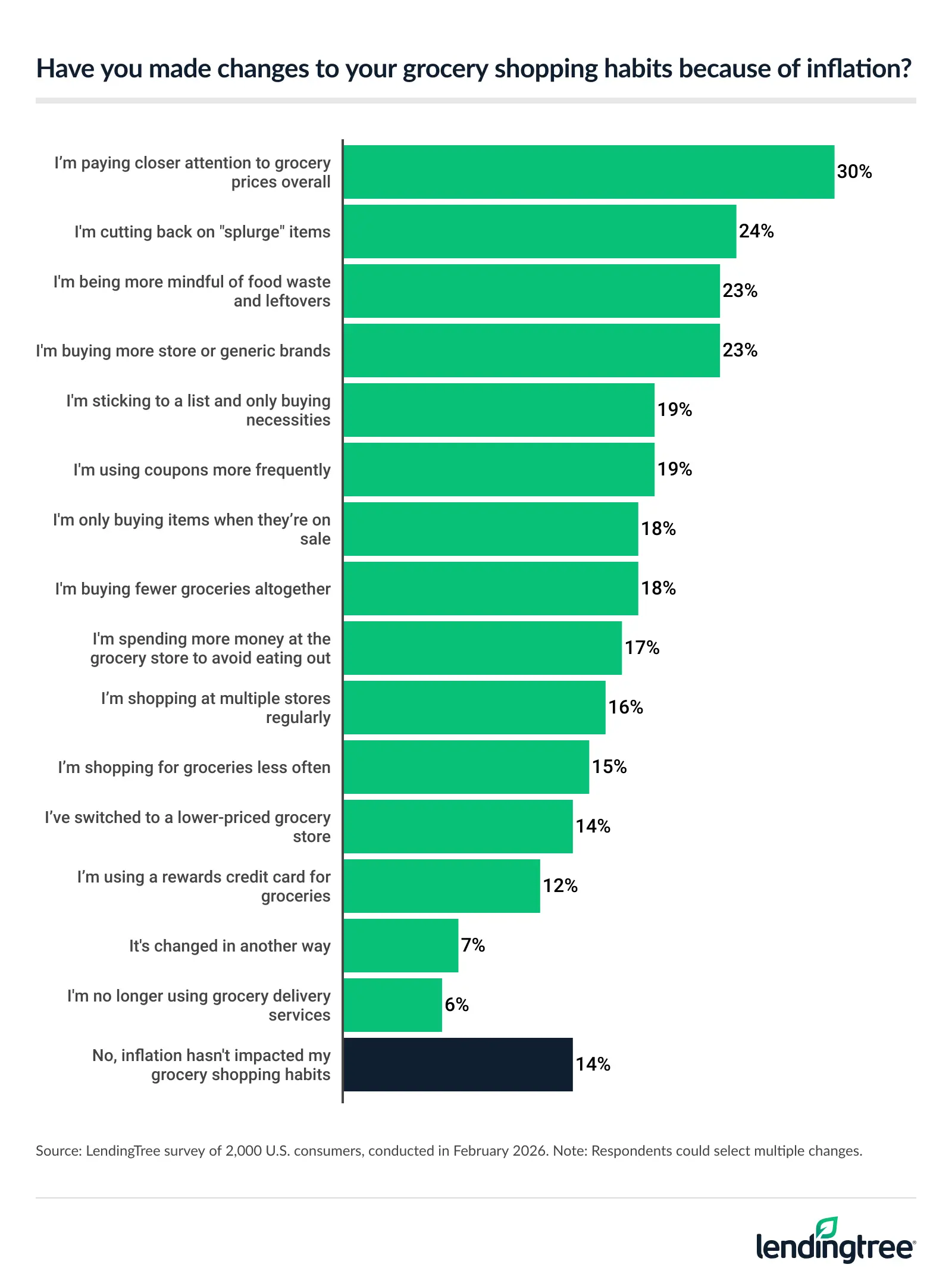
For many Americans, grocery shopping is no longer a mindless errand. Saving money at the store now takes more time, effort and attention. People are creating lists (19%), using more coupons (19%), waiting for sales (18%) and shopping at multiple stores (16%).
But some Americans are cutting back on grocery spending altogether. While fewer low-income households report changing how they shop overall, they’re among the most likely to say they’re buying fewer groceries (22%) and shopping less often (18%). This points to a concerning trend: Many low-income households may already be using common cost-cutting strategies — and are now reducing food purchases because they can’t trim costs further.
Debit is still the most popular payment method for groceries — 43% of Americans use their debit card at checkout. Credit cards (27%), cash (15%) and EBT (13%) are less popular, but payment methods differ by income.
People from high-income households are nearly twice as likely to use a grocery rewards credit card to cut costs as those from low-income households, pointing to a disparity in access to rewards cards.
Americans still eat out and order in, but habits vary by generation and income
Nearly 77% of people say they ate at a restaurant at least once in the past month, and 75% got takeout or delivery. But dining out seems to be a luxury for many Americans — 37% report eating at a restaurant less than once a week and 23% didn’t eat out once in the past month.
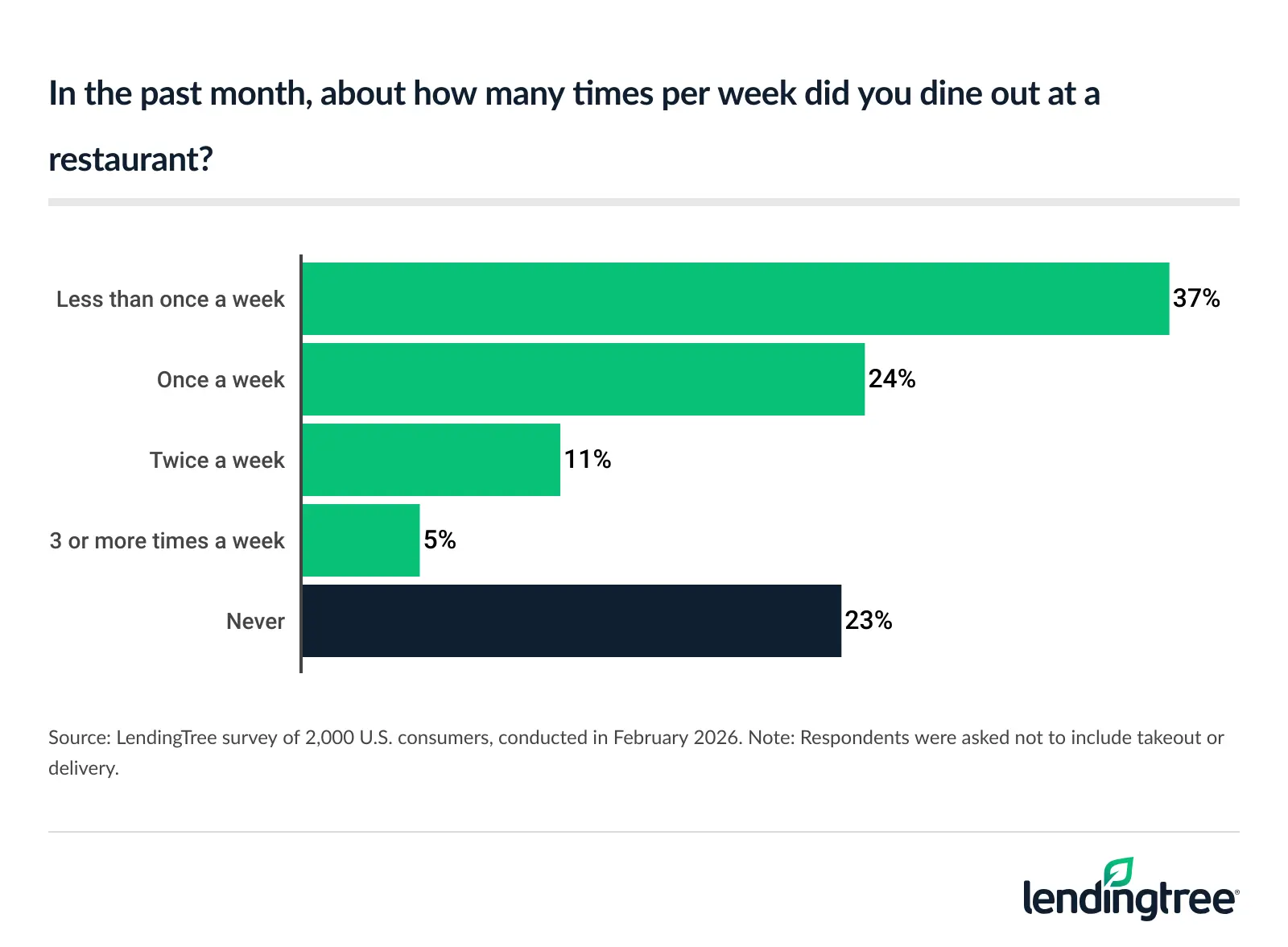
Eating out is less common with some groups. People in households earning under $30,000 per year were four times more likely to say they didn’t eat at restaurants in the past month than those earning over $100,000. Meanwhile, 43% of baby boomers report not getting takeout or delivery.
Third-party food apps are popular with younger generations: 82% of Gen Zers and 72% of millennials report using them at least occasionally. But many are cutting back. Nearly 19% of millennials and 16% of Gen Zers have stopped ordering delivery to cut back on food costs, suggesting that financial stress is causing young people to drop a favorite small luxury.
A majority (84%) of people have cut back on restaurant spending
As with groceries, most people are changing the way they dine out or order out to cut back on food costs. About 2 in 5 (39%) are eating out less altogether, and 16% have stopped getting food delivered. Many are changing where they eat, with 22% choosing cheaper restaurants or fast food, 13% eating at home before going out for a smaller meal and 11% getting takeout to cut back on tips.
People cut back on other spending categories to afford eating out
While 13% of Americans have shifted their budgets to afford eating food from restaurants (including dining in, takeout and delivery), this number rises to 24% for Gen Z and 18% for high-income families.
Young parents are also cutting other spending to afford eating out (21%), but they’re also cutting out food delivery at similar rates (18%).
Inflation has changed how people tip
Most Americans (66%) report that inflation has changed their tipping habits. Among Gen Zers, a quarter (26%) don’t tip for takeout or delivery, and 29% are tipping less than they used to for restaurant food, suggesting that financial stress from inflation is changing social tipping norms. Meanwhile, old habits die hard with baby boomers — 64% haven’t changed tipping habits at all.
While young people and parents of young kids experience food anxiety at disproportionate rates, these groups are some of the most likely to be altruistic tippers. Just 13% of people report tipping more than they used to (perhaps in order to counteract small tips from others), but that number jumps to 20% for millennials, 17% for Gen Z and 23% for parents of young kids. About 23% of high earners also report tipping more.
Methodology
LendingTree commissioned QuestionPro to conduct an online survey of 2,000 U.S. consumers ages 18 to 80 on Feb. 4-10, 2026. The survey was administered using a nonprobability-based sample, and quotas were used to ensure the sample base represented the overall population. Researchers reviewed all responses for quality control.
We defined generations as the following ages in 2026:
- Generation Z: 18 to 29
- Millennials: 30 to 45
- Generation X: 46 to 61
- Baby boomers: 62 to 80
Get debt consolidation loan offers from up to 5 lenders in minutes