Best Debt Consolidation Loans in October 2026
Compare low rates and consolidate up to $100,000 of debt


Advertising Disclosures
Loading Disclosures…
| Lender | User rating | APR | Term | Amount | Min. credit score | See Results |
|---|---|---|---|---|---|---|

|
7.74% to 35.99% (with discounts) | 24 to 84 months |
$1k – $50k |
600 | ||

|
5.99% to 29.99% | 36 to 84 months |
$5k – $50k |
620 | ||

|
6.39% to 17.99% (with autopay) | 12 to 60 months |
$600 – $50k |
Not specified | ||

|
6.30% to 35.99% | 36 or 60 months |
$1k – $75k |
None | ||

|
8.95% to 35.99% | 24 to 60 months |
$5k – $50k |
620 | ||

|
6.99% to 24.99% | 36 to 84 months |
$2.5k – $40k |
660 | ||

|
6.49% to 35.49% (with discounts) | 24 to 84 months |
$5k – $100k |
600 |
Best debt consolidation companies

Best for: Debt consolidation loans overall – Upgrade
- APR (with discounts)
- 7.74% to 35.99%
- Amount
- $1k – $50k
- Term
- 24 to 84 months
- Origination fee
- 1.85% – 9.99%
- Min. credit score
- 600
- APR discount for using loan to pay off debt
- Accepts two kinds of collateral (car and home fixtures)
- Offers joint loans
- Only need a credit score of 600 to qualify
- Origination fee charged on all loans
- Might find lower rates with another lender if you have excellent credit
- Won’t qualify if you have bad credit
Lending platform Upgrade stands out as our pick for the best debt consolidation loan for several reasons. You can get a rate discount for using some or all of your loan to pay off existing debt. And with a lower minimum credit score requirement and secured and joint loan options, it’s possible to qualify for Upgrade with less-than-perfect credit.
However, Upgrade charges a mandatory origination fee of 1.85% – 9.99%. Its starting APR isn’t the most competitive, either. Borrowers with excellent credit may qualify for a loan with no origination fee and a lower rate by shopping elsewhere.
To qualify for a loan through Upgrade, you must meet the requirements below:
- Age: Be at least 18 years old (19 in some states)
- Citizenship: Be a U.S. citizen, permanent resident or resident with a valid visa
- Administrative: Have a valid bank account and email address
- Credit score: 600+

Best for: Lower rates on secured loans – Best Egg
- APR
- 5.99% to 29.99%
- Amount
- $5k – $50k
- Term
- 36 to 84 months
- Origination fee
- 1.49% – 8.99%
- Min. credit score
- 620
- Low rates for using home fixtures as collateral
- Loans available in as little as 24 hours
- Can change your due date
- Secured loan available only to homeowners
- All loans have an origination fee
- Customer service not available on Sundays
Online lender Best Egg offers both secured and unsecured loans. Although both types generally offer competitive rates, its secured loans start at a low 5.99% APR.
To qualify for a secured loan, you must be an eligible homeowner and use your permanent home fixtures as collateral, like bathroom vanities and built-in cupboards. However, you may not be able to sell or refinance your home until your Best Egg loan is paid off.
Best Egg uses built‑in home fixtures as collateral but doesn’t require an appraisal for them. It reviews your credit history and home equity instead.
You must also meet the requirements below to qualify for a Best Egg loan:
- Age: Be of legal age to accept a loan in your state (usually 18)
- Citizenship: Be a U.S. citizen or permanent resident living in the U.S.
- Administrative: Have a personal checking account, email address and physical address
- Residency: Live in an eligible U.S. state (Best Egg operates in most states, with a small number excluded)
- Credit score: 620+

Best for: Low rates and short repayment terms – PenFed Credit Union
- APR (with autopay)
- 6.39% to 17.99%
- Amount
- $600 – $50k
- Term
- 12 to 60 months
- Origination fee
- None
- Min. credit score
- Not specified
- Can save on overall interest with a 12-month repayment term
- Low rates overall
- Offers member discounts on things like car insurance, home insurance and tax software
- Must join credit union to borrow (but anyone can become a member)
- No customer service on Sundays
If your goal is to get out of debt faster, check out PenFed. It offers a 12-month repayment term, which is much shorter than most lenders. The quicker you pay off your loan, the less time interest has to accrue. In general, debt consolidation loans with shorter terms tend to have lower rates.
Since it’s a credit union, you’ll have to become a PenFed member to borrow. However, PenFed makes this easy. You can apply for your loan and membership in one step.
Membership is open to everyone. You can also check your eligibility before joining, with no impact on your credit score.
To qualify for a PenFed loan, you must meet the following requirements:
- Membership requirements: PenFed membership (anyone can join)
- Administrative: Open a PenFed savings account with $5 deposit; may need to submit documents to verify your identity and income

Best for: Borrowers with bad credit – Upstart
- APR
- 6.30% to 35.99%
- Amount
- $1k – $75k
- Term
- 36 or 60 months
- Origination fee
- Varies
- Min. credit score
- None
- Uses an AI algorithm to help it approve more applicants
- Offers a temporary assistance plan in case of financial hardship
- No paperwork needed for instant approval decisions for most applicants
- Doesn’t let you apply with another person
- Only two repayment terms to choose from
- Origination fee possible
It can be hard to get a debt consolidation loan when you have bad credit. Online lending platform Upstart partners with lenders that may accept bad credit or no credit. Upstart uses an AI algorithm to review your application. This helps it consider factors outside of credit score (like education and employment) to approve borrowers that other lenders may deny.
Still, a bad credit debt consolidation loan may not have a lower rate than what you’re currently paying. Upstart also doesn’t allow joint loans. With some other lenders, adding a co-borrower with better credit can help you get a better rate.
Upstart has transparent eligibility requirements, including:
- Age: Be 18 or older
- Administrative: Have a U.S. address, personal bank account, email address and Social Security number
- Income: Have a valid source of income, including a job, job offer or another regular income source
- Credit-related factors: No bankruptcies within the last three years, a reasonable number of recent inquiries on your credit report and no current delinquencies
- Credit score: None

Best for: Credit card refinancing – Happy Money
- APR
- 8.95% to 35.99%
- Amount
- $5k – $50k
- Term
- 24 to 60 months
- Origination fee
- 2.00% – 12.00%
- Min. credit score
- 620
- Loans are specifically designed for consolidating credit cards
- Can request due date changes online or over the phone
- Can contact customer service via chat
- Origination fee charged on all loans
- Customer service not available on weekends
Online platform Happy Money partners with banks and credit unions that offer loans specifically for consolidating credit cards. Because its loans are designed for that purpose, the application process may be more tailored to borrowers focused on paying off current debt.
Compared to some lenders, Happy Money has a slower funding process. Be sure to continue making your current credit payments until your loan is available for payoff to protect your credit score.
Happy Money provides clear eligibility requirements on how you can qualify for a loan:
- Age: Be 18 years or older
- Administrative: Have a valid Social Security number and checking account
- Residency: Not offered in Iowa or Nevada
- Credit score: 620+
- Payment history: No current delinquencies on your credit profile

Best for: Easy borrowing experience – Discover
- APR
- 6.99% to 24.99%
- Amount
- $2.5k – $40k
- Term
- 36 to 84 months
- Origination fee
- None
- Min. credit score
- 660
- Rated 4.9 out of 5 stars by LendingTree users
- Will pay your creditors directly
- Customer service available seven days a week
- No fees
- Not the easiest lender to qualify for
- No cosigners or co-borrowers
About 97% of LendingTree users who’ve used Discover for a personal loan recommend the company. Its U.S.-based customer service department is open seven days a week, with extended business hours. Discover will also pay your creditors on your behalf, so you don’t have to.
However, Discover requires a higher minimum credit score — 660 — than many online lenders. It also doesn’t offer joint or cosigned loans, so you can’t add a second borrower to improve your approval odds.
You’ll need to meet these eligibility criteria to get a Discover loan:
- Age: Be at least 18
- Citizenship: Have a Social Security number
- Administrative: Have a physical address, email address and internet access
- Income: Minimum income of $25,000 (individually or as a household)
- Credit score: 660+

Best for: Free financial planning – SoFi
- APR (with discounts)
- 6.49% to 35.49%
Terms and conditions apply. SOFI RESERVES THE RIGHT TO MODIFY OR DISCONTINUE PRODUCTS AND BENEFITS AT ANY TIME WITHOUT NOTICE. To qualify, a borrower must be a U.S. citizen or other eligible status, be residing in the U.S., and meet SoFi’s underwriting requirements. Not all borrowers receive the lowest rate. Lowest rates reserved for the most creditworthy borrowers. If approved, your actual rate will be within the range of rates at the time of application and will depend on a variety of factors, including term of loan, evaluation of your creditworthiness, income, and other factors. If SoFi is unable to offer you a loan but matches you for a loan with a participating bank, then your rate may be outside the range of rates listed above. Rates and Terms are subject to change at any time without notice. SoFi Personal Loans can be used for any lawful personal, family, or household purposes and may not be used for post-secondary education expenses. Minimum loan amount is $5,000. The average of SoFi Personal Loans funded in 2025 was around $32K. Based on loans funded from 1/1/2025-12/31/2025. Information current as of 10/02/26. SoFi Personal Loans originated by SoFi Bank, N.A. Member FDIC. NMLS #696891 (www.nmlsconsumeraccess.org). See SoFi.com/legal for state-specific license details. See SoFi.com/eligibility for details and state restrictions. Fixed rates from 6.99% APR to 35.49% APR. APR reflect the 0.25% autopay interest rate discount and a 0.25% member rate discount. SoFi Platform personal loans are made either by SoFi Bank, N.A. or , Cross River Bank, a New Jersey State Chartered Commercial Bank, operating from its Delaware branch, Member FDIC, Equal Housing Lender. SoFi may receive compensation if you take out a loan originated by Cross River Bank. These rate ranges are current as of 10/02/26 and are subject to change without notice. Not all rates and amounts available in all states. See SoFi Personal Loan eligibility details at https://www.sofi.com/eligibility-criteria/#eligibility-personal. Not all applicants qualify for the lowest rate. Lowest rates reserved for the most creditworthy borrowers. Your actual rate will be within the range of rates listed above and will depend on a variety of factors, including evaluation of your credit worthiness, income, and other factors. Loan amounts range from $5,000– $100,000. The APR is the cost of credit as a yearly rate and reflects both your interest rate and an origination fee of 9.99% of your loan amount for Cross River Bank originated loans which will be deducted from any loan proceeds you receive and for SoFi Bank originated loans have an origination fee of 0%-7%, will be deducted from any loan proceeds you receive. *Borrow Better Week: Additional terms and conditions apply. Limited time 0.50% rate drop applies to Personal Loan and Student Loan Refinancing applications started between 10/19/2026 at 11:00 AM ET and 10/25/2026 at 11:59 PM ET. For SoFi Small Business Loans, applications must be fully submitted between 10/19/2026 at 11:00 AM ET and 10/25/2026 at 11:59 PM ET. To receive the Home Equity rate drop, you must lock your rate with SoFi between 10/19/2026 at 11:00 AM ET and 10/26/2026 at 9:00 AM ET. Offer is subject to lender approval and must meet all underwriting criteria. Promotion does not include mortgage loan purchase, mortgage refinance, or HELOC applications. Autopay Discount: The SoFi 0.25% autopay interest rate reduction requires you to make monthly payments using SoFi’s automatic monthly deduction from a savings or checking account. The discount will discontinue and be lost when you do not have autopay enabled. You’re not required to set up autopay to obtain this loan. Member Rate Discount: To be eligible for an additional 0.25% interest rate reduction on a Personal Loan, you must, within 31 days of loan funding, either (1) meet SoFi Plus eligibility criteria, (2) receive an Eligible Direct Deposit into a SoFi Checking or Savings account, or (3) receive at least $5,000 in Qualifying Deposits into a SoFi Checking or Savings account. You must continue to meet at least one of the above eligibility criteria every 31 days to maintain the discount. See the SoFi Plus terms for details on SoFi Plus subscription. For more details on Eligible Direct Deposit or Qualifying Deposits, please see https://www.sofi.com/legal/banking-rate-sheet. Once you become eligible during the initial period, the discount will be removed or reinstated depending on whether the criteria have been met. Each time your loan is re-amortized, your monthly payment amount will change based upon the interest rate that was in place. SoFi reserves the right to modify or terminate this offer at any time for unenrolled participants. You are not required to meet these criteria to be approved for a loan.
- Amount
- $5k – $100k
- Term
- 24 to 84 months
- Origination fee
- 0.00% – 7.00% (optional)
- Min. credit score
- 600
- Free consultation with a professional financial planner
- Same-day loan possible
- Accepts co-borrowers
- APR discount if SoFi pays your debt directly
- Might find a lower rate if you have excellent credit
- Lowest rates require an optional origination fee
Debt consolidation can make it easier to pay off what you owe, but it shouldn’t be the only tool in your kit. SoFi offers one no-cost financial planning session to help with your budget, debt strategies, investments and more. SoFi promises no upselling during the meeting, only advice from a professional financial planner.
SoFi is also unique in that its origination fee is optional. If you pay it, you could qualify for a lower rate. Be sure to ask for offers that include and don’t include this fee to see which option makes the most sense for you.
You must meet the requirements below to get a loan from SoFi:
- Age: Be the age of majority in your state (typically 18)
- Citizenship: Be a U.S. citizen, an eligible permanent resident or a non-permanent resident (a DACA recipient or asylum-seeker, for instance)
- Employment: Have a job or job offer with a start date within 90 days, or have regular income from another source
- Credit score: 600+
Read more about how we made our picks for the best debt consolidation loans.
- If most of your credit cards have APRs above 23% and you have good credit, there’s a good chance consolidation could reduce your interest costs.
- Look at how much interest you will pay overall, not just the monthly payment. The interest rate, loan term and origination fees all contribute to the true cost of consolidation.
- Debt consolidation can cause a temporary dip in your credit score, but the bigger risk is continuing to carry credit card balances after you consolidate.
What is debt consolidation?
Debt consolidation involves taking out a personal loan and using it to pay off multiple debts, often credit card balances.
If you’re approved, the lender will send you the money, and you will use it to pay off your debts. In some cases, the lender may send the money directly to your creditors.
If you qualify for a lower annual percentage rate (APR), you may save money and lower your monthly payment by consolidating. Many borrowers consolidate after they’ve improved their credit scores or if rates have generally dropped.
Debt consolidation can also make budgeting easier. Your payments will be the same each month, and because debt consolidation loans have a set end date, you’ll know exactly when you’ll be debt-free.
Why use LendingTree?
$3B+ in funding
In 2025 alone, LendingTree helped find over $3 billion in funding for people seeking personal loans.
$1,787 in savings
LendingTree users save $1,787
360,000 loans+
In 2025, LendingTree helped find funding for over 360,000 personal loans.
See whether you’d save with a debt consolidation loan
When to consider debt consolidation
Debt consolidation is one of the most popular reasons to take out a personal loan — more than half of users come to the LendingTree marketplace to consolidate debt or refinance credit cards. Still, everyone’s financial situation is unique, so debt consolidation isn’t the right move for everyone.
When debt consolidation may be a good idea
- You’re making your monthly payments but aren’t making much progress paying off credit card debt.
- You have at least good credit or have recently improved your credit score.
- Your budgeting would be easier if you could make one monthly payment instead of paying multiple bills.
When debt consolidation may not be right for you
- The APR isn’t much lower than what you’re currently paying.
- You think you may still need your credit card often after consolidating.
- You need to extend your loan term significantly to see monthly savings.
- The origination fees outweigh the savings you’d see by consolidating.
Average debt consolidation rates, based on LendingTree data
Debt consolidation APRs vary widely by credit score, but when looking at average card rates, those with at least good credit stand a good chance of saving.
Credit card interest rates are high right now — around 24% on average, according to LendingTree’s credit card rate tracker. By comparison, users with good credit saw average debt consolidation rates of 22.56% in the second quarter of 2026.
As your credit improves, consolidation loan rates tend to drop, which can make them a cheaper option than carrying a balance on a credit card
| Credit tier | Average APR |
|---|---|
| Excellent (800 and above) | 14.95% |
| Very good (740-799) | 17.08% |
| Good (670-739) | 22.56% |
| Fair (580-669) | 27.35% |
| Poor (under 580) | 30.45% |
Understanding total loan cost: APR, loan terms and fees
When consolidating debt, a lower monthly payment will save you money only if it also lowers your total repayment cost. One of the easiest ways to see whether consolidation is worth it is to use a debt consolidation calculator.
Here are some other key terms to help you better understand the costs behind debt consolidation.
APR measures the cost of a loan over one year, including interest and fees.
The APR on your debt consolidation loan will likely need to be at least a few percentage points lower than what you’re currently paying for you to save money on interest.
A loan term is the amount of time you have to repay your loan. Longer terms usually lower your monthly payment, but they also increase the total interest you’ll pay.
Before consolidating, estimate how long it will take you to pay off your credit cards at your current pace. Then, compare that timeline to the new loan’s term.
If it would take you longer to pay off a debt consolidation loan than it would your credit card debt, you may pay more interest by consolidating, even if the monthly payment is lower.
Some lenders charge an origination fee, typically 1% to 10% of the loan amount. This fee is usually deducted from the loan before the funds are sent to you.
To understand what you may actually gain by consolidating, subtract your origination fee from your projected interest savings.
What kind of debt can be consolidated?
You can use a debt consolidation loan to consolidate unsecured debt, though some types, such as student loans and business debt, require a specialized loan.
Debt that can be consolidated
- Credit card debt
- Payday loans
- High-interest installment loans
- Unsecured personal loans
- Medical bills
-
Student loans
If you have federal student loans, it’s better to consolidate them with a federal Direct Consolidation Loan. If you go to a refinancing company instead, your loans become private and lose special federal benefits, like income-driven repayment or loan forgiveness.
- Business debt
Debt that can’t be consolidated
- Mortgages
- Auto loans
- Secured personal loans
- Tax debt
- Child support
- Alimony
- Legal judgments
How does debt consolidation impact credit scores?
Be cautious of lenders that promise that debt consolidation will improve your credit score.
The overall impact of debt consolidation is highly personalized and depends on your financial profile and how you manage your new loan.
Aside from the potential credit score impacts outlined below, one of the most important factors to consider when consolidating debt is how you will manage your existing credit cards and future spending habits.
Between interest and debt, continuing to use your credit card while repaying your loan will likely leave you worse off financially than when you started.
| Change triggered by consolidation | Typical credit score direction | Why it happens |
|---|---|---|
| Hard credit inquiry | Small temporary decrease | New loan application |
| Paying off credit cards | Potential increase | Lower credit utilization ratio |
| Closing paid-off cards | Potential decrease | Could lower average account age |
| New debt consolidation loan | Potential increase or decrease | Could diversify credit mix or lower average account age |
| On-time loan payments | Potential increase over time | Builds positive payment history |
Should I get a debt consolidation loan?
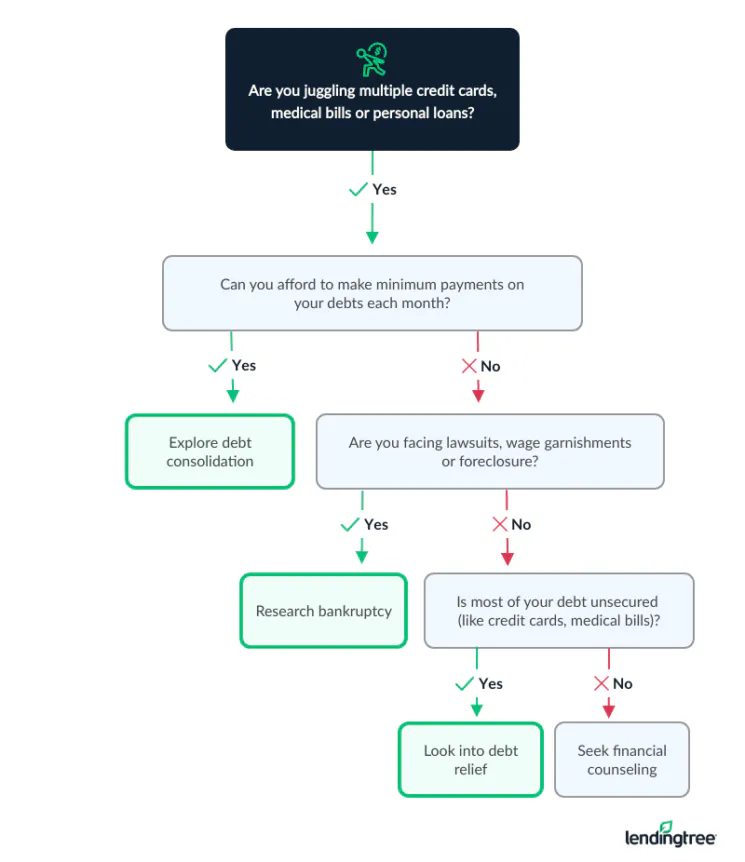
Expert insights on debt consolidation loans in 2026
What advice would you give to someone who is nervous about debt consolidation?
Shopping for a loan online can be intimidating. Understanding the risks, benefits and process of debt consolidation will help you make an informed decision about whether it is right for you.
Consolidation can be risky, but lenders tend to look at it more favorably because it shows that you’re looking to improve your balance sheet. Debt consolidation can also give you a solid payoff date and potentially save you thousands in future interest. That said, a debt consolidation loan isn’t for everyone. Research lenders, rate-shop and make sure you can afford the minimum payments.

Keep your eyes on the prize. Debt consolidation takes legwork to set up, but it can definitely be worth it. The right debt consolidation loan can shrink the amount of total interest you pay, shorten the time it takes to pay off your debt, and reduce the number of bills you need to manage each month. That’s a combination that’s pretty hard to beat.

Alternatives to debt consolidation loans
A consolidation loan isn’t the only way to get a handle on debt. In some cases, an alternative might be a better fit.
Balance transfer credit card with 0% APR
How it works: A 0% APR balance transfer credit card consolidates credit card debt with an introductory no-interest period, which sometimes lasts up to 21 months.
PROS
- No interest as long as you pay off your balance transfer card during the introductory period
- Non-introductory APR may still be lower than your current cards
CONS
- Variable APR that goes up and down based on the economy
- Only works for credit card debt
- Usually requires at least good credit
- May require a 3% to 5% balance transfer fee for each transfer you make
Home equity loan
How it works: Tap into your home’s equity to pay off debt by using your home as collateral.
PROS
- Fixed interest rates, in most cases
- Payments are the same each month
- Typically lower rates than a loan that doesn’t require collateral
CONS
- Must be a homeowner with equity
- Can lose your home if you don’t pay
- May go underwater, which means you owe more on your home than it’s worth
- May require closing costs (2% to 5% of your loan amount)
Debt management plan
How it works: With the help of a certified credit counselor, you can create a debt management plan (DMP) to repay your debt within five years.
PROS
- Free or low cost
- Credit counselor may be able to negotiate to reduce fees and interest rates
- Can consolidate many types of debt
- Promotes healthy financial habits
CONS
- Can only be used for debts that don’t require collateral
- Will likely have to stop using or close your credit cards
- Generally can’t or shouldn’t open new credit while on a DMP
What sets LendingTree content apart
Expert
Our personal loan writers and editors have 52 years of combined editorial experience and 42 years of combined personal finance experience.
Verified
100% of our content is reviewed by certified personal finance professionals and meets compliance and legal standards.
Trustworthy
We put your interests first. We’ll tell you about any loan drawbacks and be clear about when to consider alternatives.
Check out our Average LendingTree Personal Loan Rates and Marketplace Data to explore more real borrower data, including the average credit score for LendingTree users who received at least one offer.
How we chose the best debt consolidation loans
We reviewed more than 40 lenders and loan marketplaces that offer personal loans to determine the overall best eight debt consolidation loans. To make our list, lenders must offer debt consolidation loans with competitive APRs.
From there, we assessed each lender or marketplace across four categories: eligibility and access; cost to borrow; loan terms and options; repayment support and tools.
According to our standardized rating and review process, the best debt consolidation loans come from Upgrade, Best Egg, PenFed Credit Union, Upstart, Happy Money, Discover and SoFi.
Our categories
We assess how easy it is for people to qualify and apply. This includes state availability, soft-credit prequalification, membership requirements, funding speed and whether borrowers with less-than-excellent credit can get a loan.
We evaluate how affordable the loans are based on minimum and maximum APRs, loan fees and rate discounts. Lenders with unclear or potentially predatory costs receive lower scores.
We consider repayment term flexibility, loan amount ranges and whether options, like secured loans, joint loans or direct-to-creditor payments, are offered — plus whether the lender clearly communicates these options.
We evaluate borrower experience after funding: customer service access, hardship or forbearance programs, payment flexibility and digital tools, like mobile apps or credit monitoring.
Our process
We gather data directly from companies through their websites, disclosures and direct communication with company representatives. Our editorial team verifies and updates information regularly. We value transparency and award less favorable scores when lenders obscure or omit details.
Our editorial team applies the same scoring model and standards to every lender. Lenders cannot pay to influence our ratings. Read more about our editorial guidelines.
Why trust our methodology?
Our writers and editors dig through the facts, contact lenders directly and even go through the application process ourselves if it helps better explain what you can expect. As a Certified Financial Education Instructor℠, I’m committed to breaking down complex financial details so people can make confident, informed decisions with their money.

Jessica’s experience in editing and financial education helps shape LendingTree articles that are clear, accurate and truly useful to readers. Her certification means our recommendations are built on a foundation of consumer-first financial knowledge — not just numbers.
Frequently asked questions
A debt consolidation loan is a type of personal loan that combines multiple debts into a single monthly payment. You can use it to consolidate credit card debt, payday loans, high-interest installment loans, medical bills and unsecured personal loans.
According to LendingTree data, the average debt consolidation loan APR for borrowers with very good credit scores (740-799) is 17.01%. Borrowers with 800+ credit scores see lower rates, while rates can reach 35.99% if you have bad credit.
You can get a debt consolidation loan with bad credit, but the rates you qualify for may not be much lower than what you’re paying now. Your debt consolidation loan rates will likely have to be at least a few percentage points lower than your current average APR for a debt consolidation loan to be worth it.
Some debt consolidation loans have fees, the most common being an origination fee. Origination fees are usually a percentage of the loan amount you’ve been approved for.
When a lender charges an origination fee, it usually deducts it from the loan before sending you the money. You might have to borrow more than you thought to make up for this fee.
For instance, if you borrowed $50,000 with a 2% origination fee, you would actually get $49,000 (2% of $50,000 is $1,000).
You could get your debt consolidation loan the same day you apply. SoFi offer same-day loans, for example.
It can take longer if you have your new lender pay your creditors for you. Make sure you know how long this will take and continue to make payments on your current debt until consolidation is complete. Otherwise, you may miss a credit card payment and damage your credit score.