Gen Zers Fuel the Sober Surge as 45% of Americans Ditch Alcohol


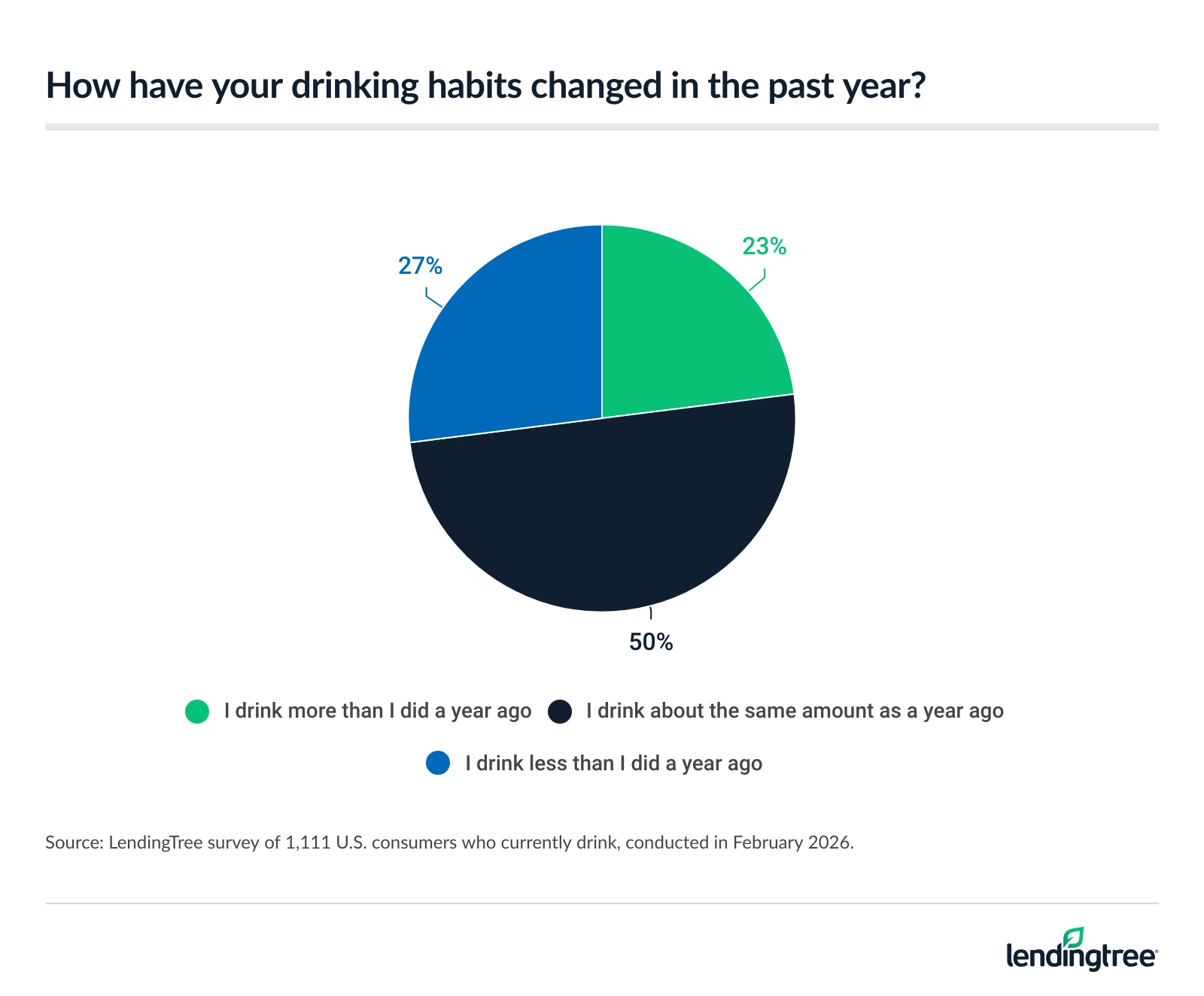
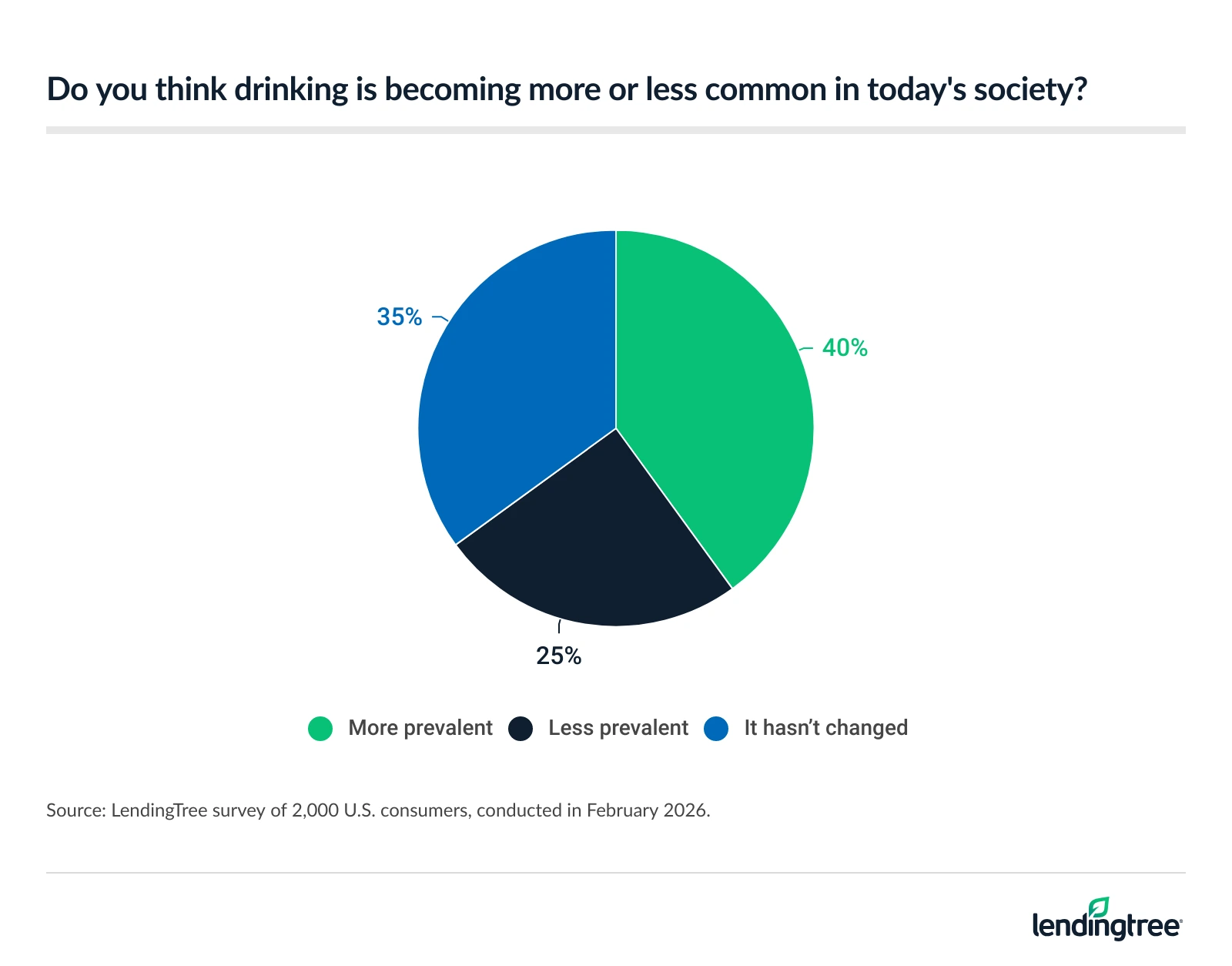
Americans are putting the brakes on booze. The percentage who say they don’t drink alcohol rose to 45%, according to LendingTree research, up from 42% in 2024. Among those who choose to raise a glass, a greater share say they’re cutting back (27%) than pouring more (23%) these days. Overall, one-quarter of Americans say drinking is becoming less common in today’s society.
So, who’s still imbibing, and how much are they spending on it? Read on for a closer look at Americans’ alcohol habits and the increasingly popular nonalcoholic alternatives some are choosing instead.
- Nearly half of Americans (45%) say they don’t drink alcohol, up from 42% in 2024. Gen Z is the most alcohol-averse generation, with 53% reporting they don’t drink. Millennials, on the other hand, are the most likely to drink (63%).
- More drinkers are cutting back than increasing consumption. 27% say they’re drinking less than they were a year ago, compared with 23% who are drinking more. Further, 20% plan to reduce drinking in the coming year. Spending on alcohol remains modest for many: 32% spend less than $25 a month on it, while just 5% spend $200 or more. Among nondrinkers, the top reasons for abstaining are lack of interest (48%), physical health (32%) and mental health (19%).
- Many Americans say drinking is becoming less common. 25% believe alcohol consumption is declining in society, including 30% of Gen Zers. Nearly half (46%) say it’s becoming less prevalent among friends and family.
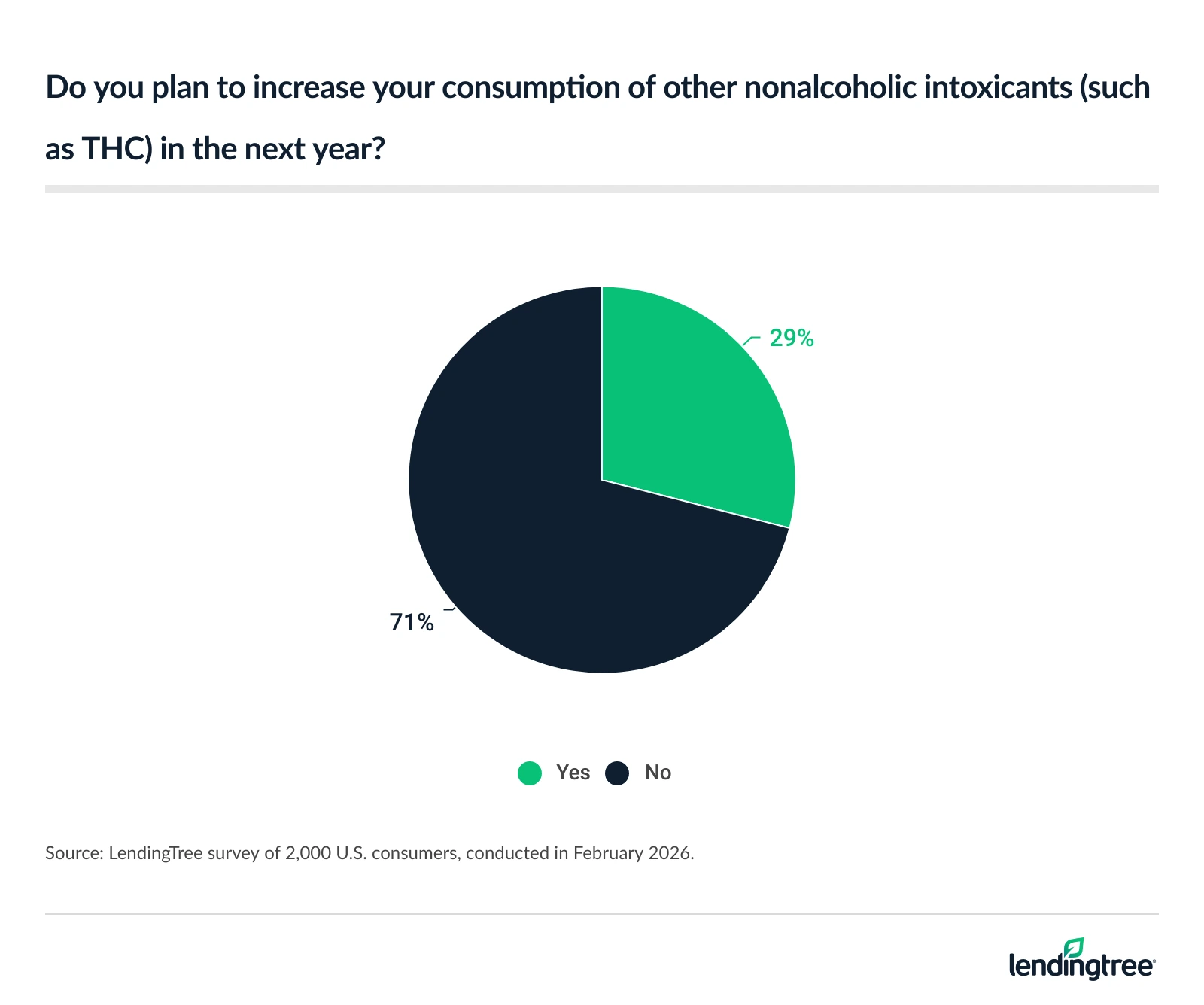
- Nonalcoholic alternatives are gaining ground. 56% of Americans say they’ve noticed more alcohol-free options at bars, restaurants and stores. In the past year, 26% increased their purchases of mocktails or NA beer — a trend led by millennials (42%) and Gen Zers (35%). Additionally, 29% plan to increase consumption of other nonalcoholic intoxicants, such as THC, in the coming year.
Nearly half of Americans say they don’t drink alcohol
Is America sobering up? To some degree, yes. While 56% choose to imbibe, nearly half of people (45%) say they don’t drink or they used to drink and don’t anymore.
More men (62%) drink alcohol than women (49%), and those with children under 18 (71%) are significantly more likely to drink than those with children 18 or older (52%) or those with no children (45%). Also, those who earn the most money are more likely to drink than those who earn the least — 75% of those who earn $100,000 or more say they drink alcohol, versus 37% of those who earn less than $30,000.
Among generations, Gen Zers (ages 18 to 29) are the least likely to drink alcohol, with 53% saying they don’t. That’s followed by baby boomers (ages 62 to 80) and Gen Xers (ages 46 to 61), both with 47% abstaining. Millennials (ages 30 to 45) are the most likely to drink, with 63% saying they do.
Here’s the demographic breakdown:
- Overall: 56% currently drink alcohol, 17% used to drink but don’t anymore and 28% don’t currently drink
- Men: 62%, 16% and 21%
- Women: 49%, 17% and 34%
- Gen Zers: 47%, 19% and 35%
- Millennials: 63%, 15% and 22%
- Gen Xers: 53%, 19% and 28%
- Baby boomers: 53%, 16% and 32%
- Parents with kids under 18: 72%, 12% and 17%
- Parents with kids 18 or older: 52%, 20% and 28%
- Those with no kids: 45%, 18% and 37%
- Those who earn less than $30,000 a year: 37%, 22% and 41%
- Those who earn $30,000 to $49,999: 57%, 16% and 27%
- Those who earn $50,000 to $99,999: 57%, 17% and 26%
- Those who earn $100,000 or more: 75%, 11% and 14%
As for why people choose to drink, 61% say they do so for relaxation, while 46% say it’s because they enjoy the taste. Other reasons given for drinking include:
- Socialization (40%)
- Celebrations (37%)
- Stress relief (37%)
- Entertainment (30%)
- To cope with mental or emotional challenges (15%)
- Out of habit (14%)
- To feel intoxicated or drunk (13%)
- Peer pressure (7%)
How often do drinkers drink? Almost half (46%) say they drink weekly (but not daily), while nearly one-quarter drink daily or nearly daily (24%). Others say they drink monthly (19%) or only on special occasions (12%).
Men are more likely to drink daily (or almost daily) than women — 28% versus 19%, respectively. Generationally, millennials are more likely to drink daily than any other generation, with 30% of millennial drinkers saying they do, versus 21% of Gen Zers, 21% of Gen Xers and 18% of baby boomers.
More drinkers are cutting back than increasing consumption
Of those who do drink, many are doing less of it, or are planning to. More than a quarter (27%) of Americans who drink say they’re drinking less than a year ago, compared with 23% who are drinking more. Further, 20% plan to reduce their drinking in the coming year.
Across all demographics (gender, generation, household income and parental status), baby boomers (37%) are the most likely to report drinking less than a year ago.
On the other end of the spectrum, 17% say they plan to drink more in the coming year, while 53% intend to maintain their drinking status quo.
For those who don’t drink, however, the most commonly cited reason (48%) is a lack of interest in alcohol. Other reasons given include:
- Physical health reasons (32%)
- Mental health reasons (19%)
- Personal or past addiction issues (15%)
- Family reasons (14%)
- Religious reasons (14%)
- Legal reasons (4%)
Meanwhile, only 11% say financial reasons.
For the most part, booze doesn’t seem to be significantly impacting budgets: 32% of drinkers report spending less than $25 a month on alcohol, while just 5% spend $200 or more. Among all demographics, those who make $100,000 or more (11%) and those with children under 18 (8%) are the most likely to spend $200 or more a month on alcohol.
Still, Matt Schulz, LendingTree chief consumer finance analyst and author of “Ask Questions, Save Money, Make More: How to Take Control of Your Financial Life,” says that every bit helps, and cutting back on alcohol can have a big impact on your budget.
“Regardless of whether you have it at home or elsewhere, alcohol is expensive,” Schulz says. “Spending less on that can free up money to go toward important priorities, such as an emergency fund, retirement savings or paying off high-interest debt. That’s a big deal, especially when you consider how tight many Americans’ budgets really are.”
As for where Americans are spending the most money on alcohol, 61% say it’s at liquor stores or grocery stores. Meanwhile, 25% say they spend the most on booze at bars or restaurants. Those who earn $100,000 or more (37%) and those with children under 18 (31%) are the most likely to report spending the most money on alcohol at bars or restaurants, while those earning less than $30,000 (15%) are the least likely to spend the most on alcohol at those locations.
Many Americans say drinking is becoming less common
Is the party over for alcohol? Not quite. While 25% think drinking is becoming less common in today’s society, 40% say it’s becoming more prevalent, and 35% say it hasn’t changed.
Gen Zers are the most likely to say drinking is becoming less prevalent (30%). Gen Xers (21%) are the least likely to share that opinion.
On a more personal level, 46% of Americans say drinking is becoming less prevalent among their friends and family, including 17% who strongly agree and 29% who somewhat agree.
Millennials and Gen Zers are the generations most likely to say drinking is becoming less prevalent among their friends and family, with 53% and 47%, respectively, saying so.
Nonalcoholic alternatives are gaining ground
The buzz around nonalcoholic alternatives is building, with 56% of Americans saying they’ve noticed more alcohol-free options at bars, restaurants and stores.
Who’s buying the booze-free beverages? In the past year, 26% say they increased purchases of mocktails or nonalcoholic beer, with millennials (42%) and Gen Zers (35%) the most likely age groups to say so.
Additionally, 29% say they plan to consume more nonalcoholic intoxicants, such as THC, in the coming year. Of all the demographics, those with children under 18 (51%) are most likely to plan to consume nonalcoholic alternatives, followed by six-figure earners (46%), Gen Zers (42%) and millennials (42%).
5 tips to be intentional about alcohol spending
Sipping away your hard-earned money? If you choose to drink, there are ways to keep your spending in check so that you don’t drink your budget dry. Here are five tips to try:
- Track how much you spend on alcohol: Keeping track of your spending on alcohol for a month can be a real eye-opener. “There’s a good chance that you have no idea how much you’re spending on alcohol, and seeing what that number is could be a major wake-up call to help you change your habit,” Schulz says.
- Tell your friends and family that you’re watching your alcohol spending: Drinking is such a social activity. The last thing you need when you’re watching your alcohol spending is for loved ones to invite you out for a happy hour or some other gathering where alcohol spending is just part of the deal. “They might even be inviting you with good intentions, hoping to help you blow off some steam,” Schulz says. “However, if they knew you were trying to cut back, they’d ideally make different plans. And if they keep pushing you to drink even after you’ve told them you’re trying to cut back, maybe it is time to seek out new friends.”
- Choose when to drink: For many, drinking becomes a habit. A nightly glass of wine here, a beer after work to unwind there. Before you crack one open, ask yourself why you’re drinking. If it’s because you’re bored or stressed and it’s not an occasion you’ve chosen on purpose, consider grabbing some tea, water or another beverage instead. You’ll likely be surprised by how much you don’t miss the alcohol, and how quickly the savings add up. Save the libations for special occasions you plan for and look forward to, such as gatherings with friends or holidays.
- Set limits: Decide in advance when you’re going to drink and how much you’re going to drink before you start drinking. Often, once the drinks start flowing, it’s a lot more difficult to say no. If you head out with a firm plan when your head is clear, it’s easier to say “I’m good” after you hit the limit you set. Also consider offering to be the designated driver, which offers an extra layer of accountability and savings. It puts a firm boundary in place from the start, and you’ll save money on drinks and taxis or rideshares, too.
- Participate in set sober times: Dry January, Sober October, Dry July — there are a host of popular weeks and months during which people temporarily stop drinking. Not only do these months give you a set excuse to say no, but they also give your budget a break from spending on the booze. Track the savings from every bit of alcohol you would have purchased during that time, and you just may be so pleasantly surprised by the sum that you choose to keep going.
Methodology
LendingTree commissioned QuestionPro to conduct an online survey of 2,000 U.S. consumers ages 18 to 80 on Feb. 4-10, 2026. The survey was administered using a nonprobability-based sample, and quotas were used to ensure the sample base represented the overall population. Researchers reviewed all responses for quality control.
We defined generations as the following ages in 2026:
- Generation Z: 18 to 29
- Millennials: 30 to 45
- Generation X: 46 to 61
- Baby boomers: 62 to 80