A Typical Hospital Stay Tops $16,000 — Here’s Where It Takes the Most Work to Earn That Much


A hospital stay can now carry expenses exceeding what the average American earns in two and a half months of work.
A LendingTree analysis found that the average inpatient stay carries an estimated $16,353 in hospital expenses. Depending on where you live, earning that amount could take anywhere from a couple of months to the better part of a year.
These figures estimate hospitals’ expenses for providing inpatient care — not what patients are billed, what they pay out of pocket or what insurers reimburse. A patient’s bill depends heavily on their coverage and can differ significantly from these totals.
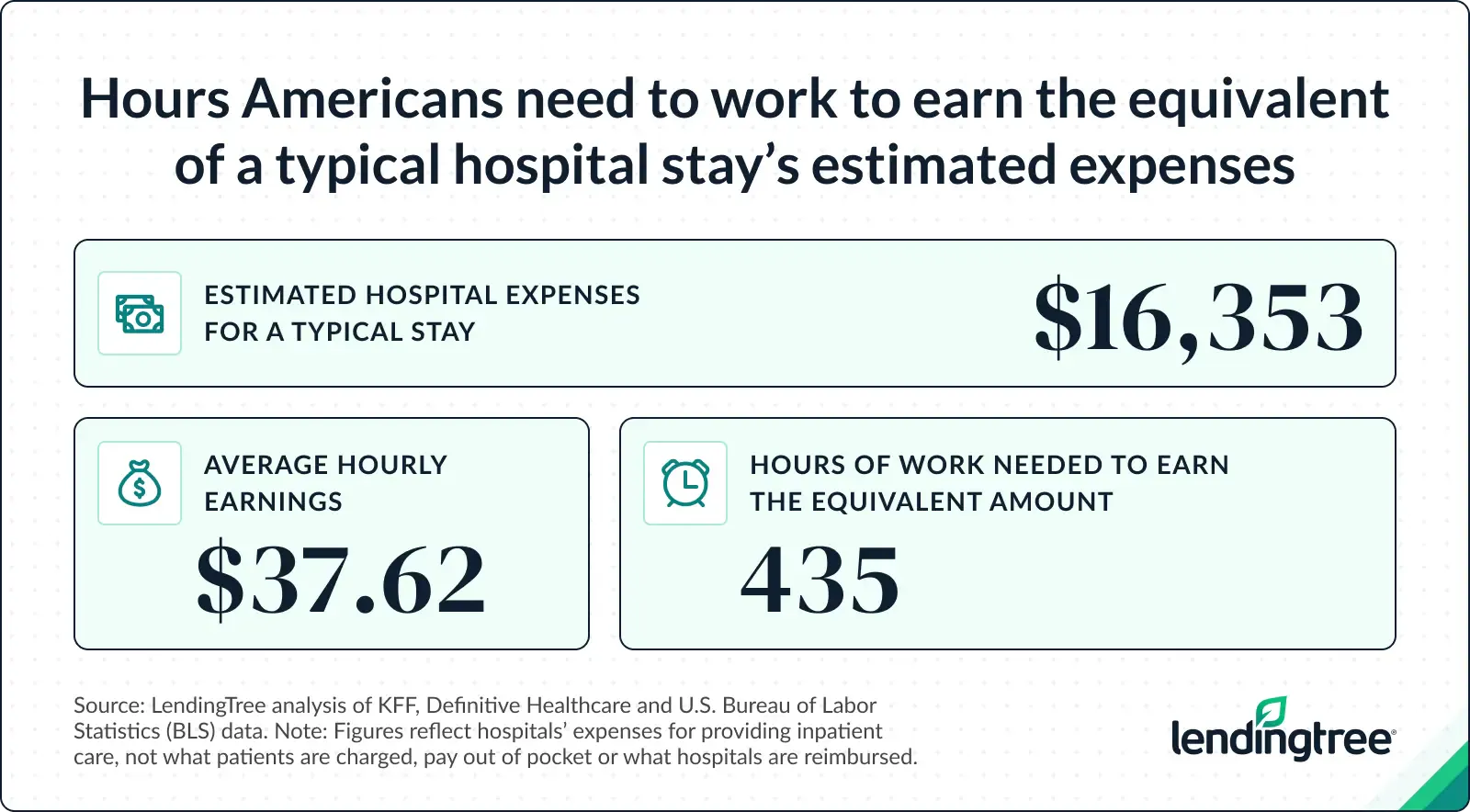
- Americans would need to work 435 hours, or nearly 11 weeks, to earn the equivalent of the estimated hospital expenses for a typical stay. At $3,297 per day, a typical 4.96-day stay totals an estimated $16,353 in hospital expenses. Based on U.S. workers’ average hourly earnings of $37.62, earning that amount would require about one-fifth of a standard 2,080-hour work year.
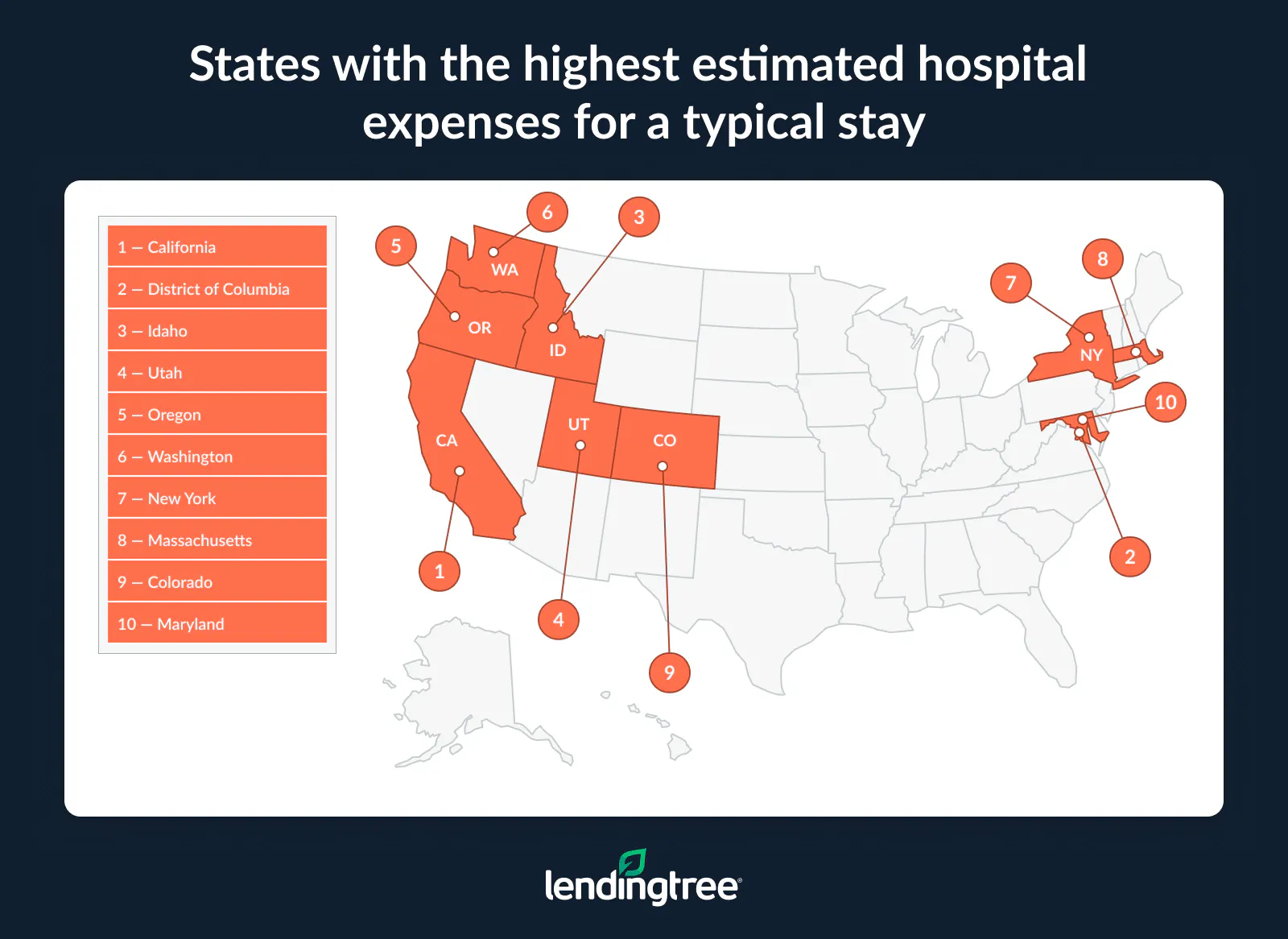
- California has the highest estimated hospital expenses for a typical stay, at $23,530 — 43.9% above the $16,353 national average. The District of Columbia ($23,153) and Idaho ($22,236) follow.
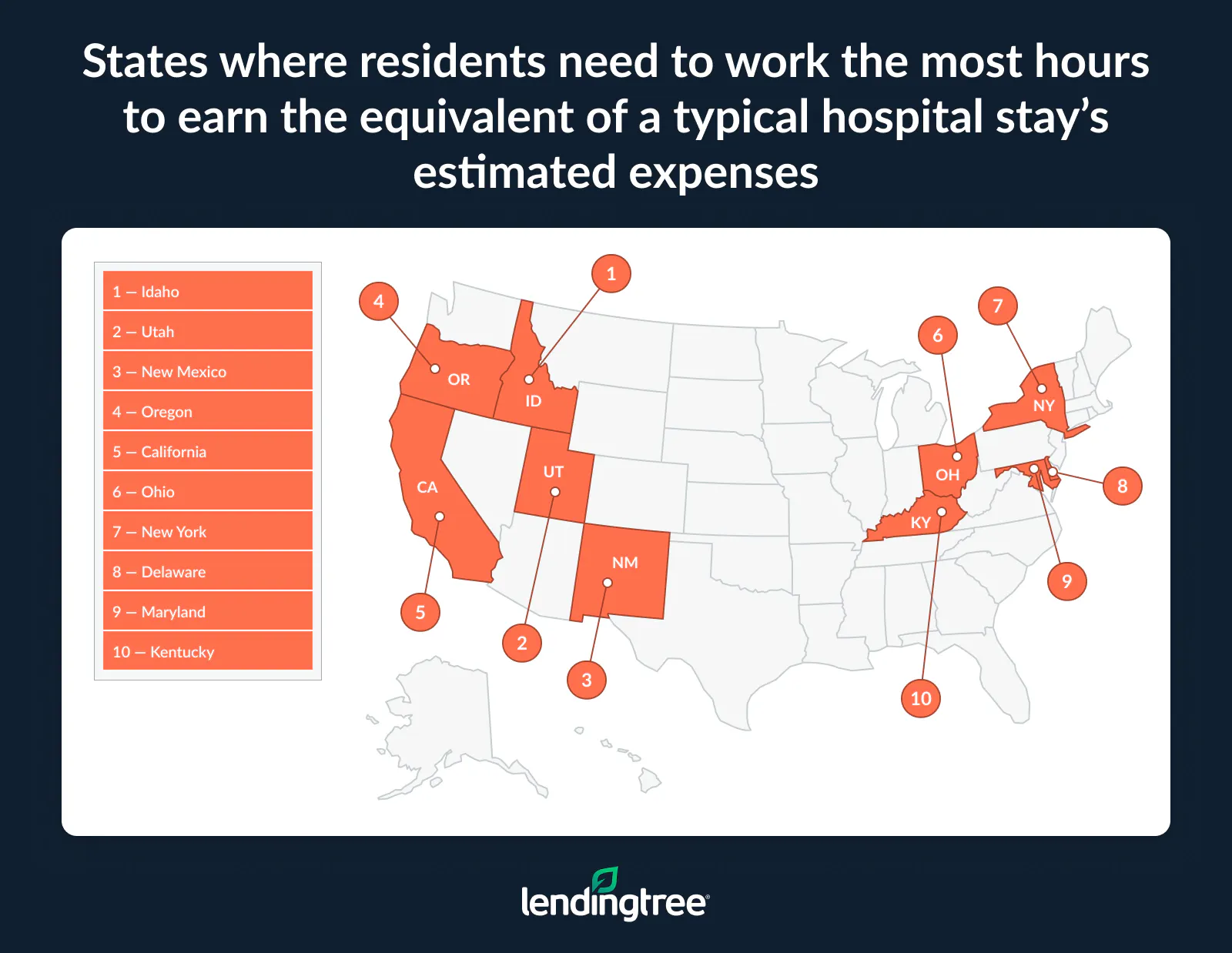
- Idaho residents would need to work 648 hours to earn the equivalent of the estimated hospital expenses for a typical stay — more than residents of any other state. This is based on the state’s estimated $22,236 in hospital expenses per typical stay and average hourly earnings of $34.32. Utah and New Mexico follow, requiring 624 and 595 hours of work, respectively.
- Hospital expenses are rising faster than workers’ earnings. Since our previous analysis, the estimated hospital expenses for a typical stay rose 26.1%, from $12,974 to $16,353. Average hourly earnings rose 11.2%, from $33.82 to $37.62.
- A typical hospital stay now requires 13.3% more work time to earn the equivalent of its estimated hospital expenses than in our previous analysis, rising from 384 to 435 hours. The increase reflects a longer average stay, from 4.50 to 4.96 days, and a 14.4% rise in daily hospital expenses, compared with an 11.2% increase in hourly earnings. Required work hours rose the most in Alaska (62.3%), North Dakota (56.2%) and Idaho (40.0%). Only Nevada (4.6%), Arkansas (2.2%) and Hawaii (0.2%) saw decreases.
It takes nearly 11 weeks of work to earn the equivalent of a typical hospital stay
The average hospital stay lasts 4.96 days and carries estimated expenses of $3,297 per day, according to our analysis, adding up to $16,353 for a typical stay.
For the typical U.S. worker earning $37.62 an hour on average, earning that amount would require 435 hours of labor — close to 11 weeks, or about one-fifth of a standard 2,080-hour work year. (This assumes 40 hours of work a week for 52 weeks and doesn’t account for PTO, vacations or other time off.)
According to LendingTree health insurance expert Cate Deventer, a patient’s bill can vary widely.
“The amount you might pay after a hospital stay can vary widely depending on whether you’re insured, the details of your plan and how much healthcare you’ve had earlier in the year,” she says. “For example, two people with the same plan could pay vastly different amounts if one person has nearly met their out-of-pocket maximum for the year and the other hasn’t.”
Where hospital stays have the highest (and lowest) estimated expenses
Estimated hospital expenses vary widely by state. California tops the list at $23,530 per typical stay — 43.9% above the $16,353 national average — equivalent to 569 hours of labor based on average hourly earnings of $41.32.
The District of Columbia ($23,153) follows, where residents would need to work 429 hours to earn the equivalent amount based on average hourly earnings of $54.02, followed by Idaho ($22,236), where residents would need to work 648 hours based on average hourly earnings of $34.32.
At the other end of the spectrum, Mississippi has the lowest estimated hospital expenses in the country, at $6,949 per typical stay — and it’s one of only two states, along with Alabama ($9,781), where estimated expenses for a typical stay are less than $10,000.
Idaho workers face the most work hours, especially at minimum wage
While California has the highest estimated hospital expenses, Idaho residents need the most work hours to earn the equivalent of a typical stay. Based on the state’s $22,236 in estimated expenses for a typical hospital stay and average hourly earnings of $34.32, Idaho workers would need to work 648 hours — more than anywhere else in the country.
Utah (624 hours) and New Mexico (595 hours) aren’t far behind.
At the other end of the spectrum, Mississippi workers would need 247 hours to earn the equivalent of the estimated expenses for a typical hospital stay — 188 hours fewer than the national average. Alabama (311 hours) and South Dakota (325 hours) follow.
The required work time is far greater for Idaho’s minimum wage workers, who earn $7.25 an hour and would need to work 3,067 hours — nearly a year and a half of full-time work — to earn the equivalent of the estimated expenses for a typical stay. Utah (3,013 hours) and North Dakota (2,339 hours) follow. All 15 states where minimum wage workers need the most hours have a $7.25 minimum wage. (These include states with a statewide minimum wage of $7.25 and those where the federal $7.25 minimum applies.)
By comparison, South Dakota workers earning the state’s $11.85 minimum wage would need to work 860 hours, the fewest nationwide. Hawaii (952 hours) and Nebraska (954 hours) follow.
Full rankings: States where residents need to work the most/least hours to earn the equivalent of the estimated expenses for a typical hospital stay
| Rank | State | Estimated hospital expenses for a typical stay | Avg. hourly earnings | Hours of work needed to earn the equivalent of a stay |
|---|---|---|---|---|
| 1 | Idaho | $22,236 | $34.32 | 648 |
| 2 | Utah | $21,844 | $35.01 | 624 |
| 3 | New Mexico | $17,420 | $29.29 | 595 |
| 4 | Oregon | $21,779 | $37.23 | 585 |
| 5 | California | $23,530 | $41.32 | 569 |
| 6 | Ohio | $18,258 | $33.14 | 551 |
| 7 | New York | $20,837 | $39.03 | 534 |
| 8 | Delaware | $17,176 | $32.86 | 523 |
| 9 | Maryland | $18,793 | $36.05 | 521 |
| 10 | Kentucky | $15,078 | $30.20 | 499 |
| 11 | Washington | $21,085 | $42.49 | 496 |
| 12 | Indiana | $15,857 | $32.22 | 492 |
| 13 | Pennsylvania | $16,001 | $32.72 | 489 |
| 13 | North Dakota | $16,958 | $34.67 | 489 |
| 15 | Arizona | $16,919 | $34.80 | 486 |
| 16 | Colorado | $19,141 | $39.48 | 485 |
| 16 | Tennessee | $15,073 | $31.07 | 485 |
| 18 | Vermont | $16,973 | $35.05 | 484 |
| 19 | New Jersey | $18,263 | $38.10 | 479 |
| 20 | New Hampshire | $16,874 | $35.53 | 475 |
| 21 | Rhode Island | $17,206 | $36.57 | 471 |
| 22 | Texas | $16,254 | $34.56 | 470 |
| 23 | Massachusetts | $19,756 | $42.32 | 467 |
| 24 | Maine | $14,999 | $32.54 | 461 |
| 25 | Louisiana | $13,625 | $29.80 | 457 |
| 26 | Connecticut | $17,811 | $39.19 | 454 |
| 27 | Illinois | $15,847 | $35.28 | 449 |
| 28 | Virginia | $16,353 | $36.62 | 447 |
| 29 | Florida | $15,178 | $34.46 | 440 |
| 29 | Missouri | $14,334 | $32.56 | 440 |
| 31 | North Carolina | $14,885 | $33.91 | 439 |
| 32 | Nebraska | $14,305 | $32.69 | 438 |
| 33 | District of Columbia | $23,153 | $54.02 | 429 |
| 34 | South Carolina | $13,794 | $32.30 | 427 |
| 35 | Kansas | $13,174 | $31.82 | 414 |
| 36 | Wisconsin | $14,106 | $34.24 | 412 |
| 37 | Michigan | $13,600 | $33.35 | 408 |
| 37 | Oklahoma | $12,633 | $30.97 | 408 |
| 39 | West Virginia | $12,226 | $30.01 | 407 |
| 40 | Hawaii | $15,237 | $37.83 | 403 |
| 41 | Minnesota | $15,569 | $39.26 | 397 |
| 42 | Alaska | $14,999 | $37.92 | 396 |
| 43 | Nevada | $11,978 | $32.16 | 372 |
| 44 | Montana | $12,083 | $32.81 | 368 |
| 44 | Wyoming | $11,790 | $32.05 | 368 |
| 46 | Arkansas | $10,654 | $29.78 | 358 |
| 47 | Georgia | $11,755 | $34.71 | 339 |
| 48 | Iowa | $10,079 | $30.55 | 330 |
| 49 | South Dakota | $10,188 | $31.31 | 325 |
| 50 | Alabama | $9,781 | $31.44 | 311 |
| 51 | Mississippi | $6,949 | $28.08 | 247 |
Full rankings: Where minimum wage earners need to work the most/least hours to earn the equivalent of the estimated expenses for a typical hospital stay
| Rank | State | Estimated hospital expenses for a typical stay | Minimum wage | Hours of work needed to earn the equivalent of a stay |
|---|---|---|---|---|
| 1 | Idaho | $22,236 | $7.25 | 3,067 |
| 2 | Utah | $21,844 | $7.25 | 3,013 |
| 3 | North Dakota | $16,958 | $7.25 | 2,339 |
| 4 | New Hampshire | $16,874 | $7.25 | 2,327 |
| 5 | Texas | $16,254 | $7.25 | 2,242 |
| 6 | Pennsylvania | $16,001 | $7.25 | 2,207 |
| 7 | Indiana | $15,857 | $7.25 | 2,187 |
| 8 | Kentucky | $15,078 | $7.25 | 2,080 |
| 9 | Tennessee | $15,073 | $7.25 | 2,079 |
| 10 | North Carolina | $14,885 | $7.25 | 2,053 |
| 11 | Wisconsin | $14,106 | $7.25 | 1,946 |
| 12 | South Carolina | $13,794 | $7.25 | 1,903 |
| 13 | Louisiana | $13,625 | $7.25 | 1,879 |
| 14 | Kansas | $13,174 | $7.25 | 1,817 |
| 15 | Oklahoma | $12,633 | $7.25 | 1,742 |
| 16 | Ohio | $18,258 | $11.00 | 1,660 |
| 17 | Wyoming | $11,790 | $7.25 | 1,626 |
| 18 | Georgia | $11,755 | $7.25 | 1,621 |
| 19 | New Mexico | $17,420 | $12.00 | 1,452 |
| 20 | Oregon | $21,779 | $15.55 | 1,401 |
| 21 | West Virginia | $12,226 | $8.75 | 1,397 |
| 22 | California | $23,530 | $16.90 | 1,392 |
| 23 | Iowa | $10,079 | $7.25 | 1,390 |
| 24 | Minnesota | $15,569 | $11.41 | 1,365 |
| 25 | Alabama | $9,781 | $7.25 | 1,349 |
| 26 | Massachusetts | $19,756 | $15.00 | 1,317 |
| 27 | New York | $20,837 | $16.00 | 1,302 |
| 28 | Virginia | $16,353 | $12.77 | 1,281 |
| 29 | Colorado | $19,141 | $15.16 | 1,263 |
| 30 | District of Columbia | $23,153 | $18.40 | 1,258 |
| 31 | Maryland | $18,793 | $15.00 | 1,253 |
| 32 | Washington | $21,085 | $17.13 | 1,231 |
| 33 | Vermont | $16,973 | $14.42 | 1,177 |
| 34 | New Jersey | $18,263 | $15.92 | 1,147 |
| 35 | Delaware | $17,176 | $15.00 | 1,145 |
| 36 | Arizona | $16,919 | $15.15 | 1,117 |
| 37 | Montana | $12,083 | $10.85 | 1,114 |
| 38 | Florida | $15,178 | $14.00 | 1,084 |
| 39 | Rhode Island | $17,206 | $16.00 | 1,075 |
| 40 | Alaska | $14,999 | $14.00 | 1,071 |
| 41 | Illinois | $15,847 | $15.00 | 1,056 |
| 42 | Connecticut | $17,811 | $16.94 | 1,051 |
| 43 | Nevada | $11,978 | $12.00 | 998 |
| 44 | Maine | $14,999 | $15.10 | 993 |
| 45 | Michigan | $13,600 | $13.73 | 991 |
| 46 | Arkansas | $10,654 | $11.00 | 969 |
| 47 | Mississippi | $6,949 | $7.25 | 958 |
| 48 | Missouri | $14,334 | $15.00 | 956 |
| 49 | Nebraska | $14,305 | $15.00 | 954 |
| 50 | Hawaii | $15,237 | $16.00 | 952 |
| 51 | South Dakota | $10,188 | $11.85 | 860 |
Hospital expenses are climbing much faster than paychecks
The gap between hospital expenses and workers’ earnings is widening. Since the previous analysis, estimated hospital expenses for a typical stay rose 26.1%, from $12,974 (using 2021 data, the latest available at the time) to $16,353 (using 2024 data).
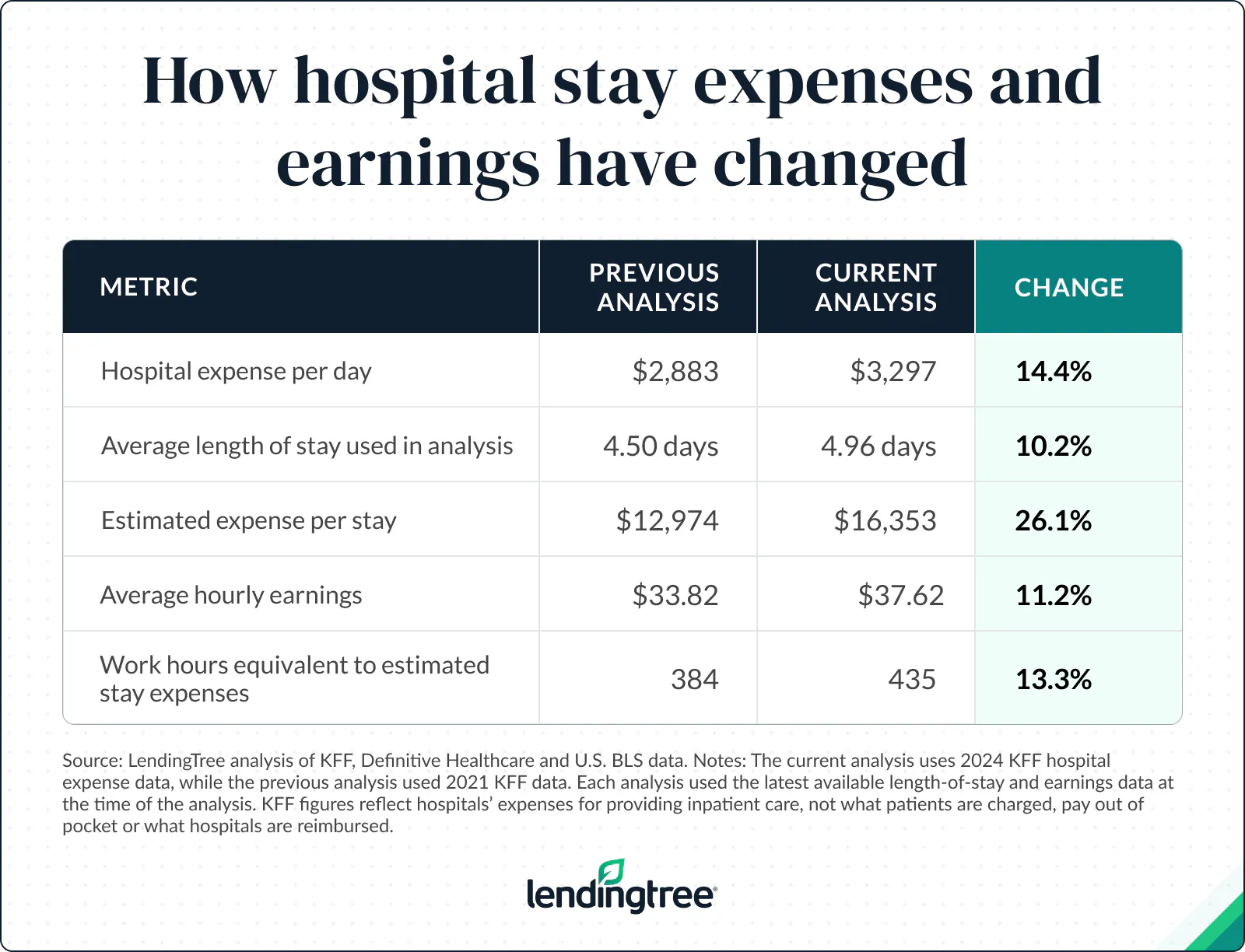
Meanwhile, average hourly earnings rose 11.2%, from $33.82 (using 2022 data) to $37.62 (using 2025 data).
It now takes 13% longer to earn the equivalent of a hospital stay
The work time needed to earn the equivalent of the estimated expenses for a typical hospital stay has climbed 13.3% since our previous analysis — from 384 to 435 hours.
That’s largely due to a longer average hospital stay, which rose from 4.50 to 4.96 days, and a 14.4% rise in daily hospital expenses — higher than the 11.2% increase in hourly earnings.
By state, the required work time grew fastest in Alaska (62.3%), North Dakota (56.2%) and Idaho (40.0%).
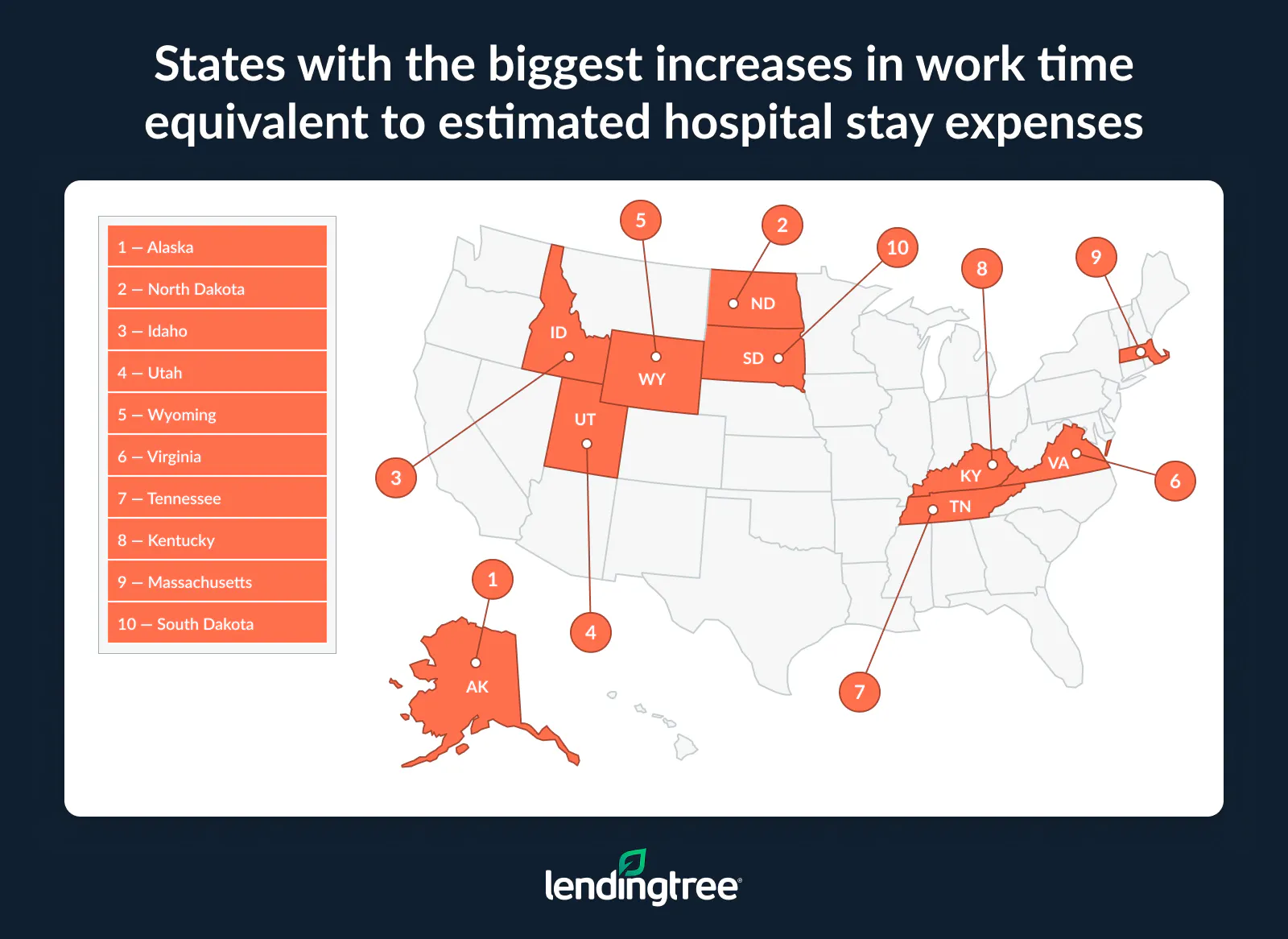
Just three states saw decreases: Nevada (4.6%), Arkansas (2.2%) and Hawaii (0.2%).
Full rankings: States with the biggest increases in work time equivalent to estimated hospital stay expenses
| Rank | State | Current hours of work needed | Hours of work needed in the previous analysis | Change (%) |
|---|---|---|---|---|
| 1 | Alaska | 396 | 244 | 62.3% |
| 2 | North Dakota | 489 | 313 | 56.2% |
| 3 | Idaho | 648 | 463 | 40.0% |
| 4 | Utah | 624 | 453 | 37.7% |
| 5 | Wyoming | 368 | 283 | 30.0% |
| 6 | Virginia | 447 | 347 | 28.8% |
| 7 | Tennessee | 485 | 391 | 24.0% |
| 8 | Kentucky | 499 | 412 | 21.1% |
| 9 | Massachusetts | 467 | 386 | 21.0% |
| 10 | South Dakota | 325 | 269 | 20.8% |
| 11 | District of Columbia | 429 | 357 | 20.2% |
| 12 | Minnesota | 397 | 333 | 19.2% |
| 13 | New York | 534 | 453 | 17.9% |
| 14 | New Hampshire | 475 | 405 | 17.3% |
| 15 | Kansas | 414 | 357 | 16.0% |
| 16 | Maryland | 521 | 452 | 15.3% |
| 17 | Pennsylvania | 489 | 425 | 15.1% |
| 18 | Michigan | 408 | 355 | 14.9% |
| 19 | New Jersey | 479 | 419 | 14.3% |
| 20 | North Carolina | 439 | 386 | 13.7% |
| 21 | Colorado | 485 | 427 | 13.6% |
| 22 | Ohio | 551 | 486 | 13.4% |
| 23 | California | 569 | 503 | 13.1% |
| 24 | Louisiana | 457 | 406 | 12.6% |
| 25 | West Virginia | 407 | 362 | 12.4% |
| 26 | Rhode Island | 471 | 422 | 11.6% |
| 27 | Nebraska | 438 | 393 | 11.5% |
| 28 | Iowa | 330 | 297 | 11.1% |
| 29 | Oklahoma | 408 | 369 | 10.6% |
| 30 | Vermont | 484 | 440 | 10.0% |
| 31 | Florida | 440 | 401 | 9.7% |
| 32 | Oregon | 585 | 535 | 9.3% |
| 32 | Washington | 496 | 454 | 9.3% |
| 34 | Illinois | 449 | 411 | 9.2% |
| 35 | Connecticut | 454 | 420 | 8.1% |
| 36 | Alabama | 311 | 288 | 8.0% |
| 37 | Maine | 461 | 429 | 7.5% |
| 38 | Texas | 470 | 438 | 7.3% |
| 39 | South Carolina | 427 | 401 | 6.5% |
| 40 | Missouri | 440 | 414 | 6.3% |
| 41 | Delaware | 523 | 498 | 5.0% |
| 42 | Indiana | 492 | 471 | 4.5% |
| 43 | Georgia | 339 | 325 | 4.3% |
| 44 | Arizona | 486 | 467 | 4.1% |
| 45 | New Mexico | 595 | 581 | 2.4% |
| 46 | Montana | 368 | 361 | 1.9% |
| 47 | Wisconsin | 412 | 405 | 1.7% |
| 48 | Mississippi | 247 | 245 | 0.8% |
| 49 | Hawaii | 403 | 404 | -0.2% |
| 50 | Arkansas | 358 | 366 | -2.2% |
| 51 | Nevada | 372 | 390 | -4.6% |
Plan ahead to lower hospital costs
If you’re facing a nonemergency hospital stay, doing some research beforehand can help you understand what you may owe and potentially reduce your out-of-pocket costs. Deventer recommends the following:
- Get a cost estimate. “Work with your doctor and hospital to understand what care you’ll need and request an estimate for your stay,” Deventer says. “Knowing the approximate cost ahead of time can help you plan and avoid surprises.”
- Ask about financial assistance. “Many hospitals offer financial assistance or payment programs for uninsured and underinsured patients,” she says. “Ask what programs are available and whether you qualify before your hospitalization.”
- Confirm your insurance coverage. “If you have insurance but are concerned about costs, check that your hospital and doctor are in network, confirm that your procedure is covered and complete any required prior authorizations,” she says.
Methodology
LendingTree researchers used 2024 KFF data on hospital expenses per adjusted inpatient day, based on American Hospital Association (AHA) data. To estimate the expenses for a typical hospital stay, researchers multiplied the daily expense by the average stay of 4.96 days, according to Definitive Healthcare data as of October 2025. They then divided that amount by average hourly earnings to estimate how many hours a worker would need to work to earn the equivalent amount.
State earnings are 2025 annual averages for employees on private nonfarm payrolls from the U.S. Bureau of Labor Statistics (BLS), while the national estimate uses preliminary July 2026 BLS average hourly earnings for employees on private nonfarm payrolls. State minimum wages are as of July 1, 2026, according to the U.S. Department of Labor (DOL). Researchers used the standard statewide rate where multiple rates apply.
For comparisons with the previous analysis, the current study uses 2024 hospital expense data, while the previous analysis used 2021 data. Each analysis used the most current earnings and length-of-stay figures available at the time.