Summer Season Travel Takes a Hit as Rising Transportation Costs Keep Americans Grounded


Summer is typically synonymous with road trips, beach getaways, family vacations and more. But for many Americans this year, rising travel expenses are making staying home the most appealing destination of all.
According to a LendingTree survey of 2,000 U.S. consumers, transportation costs are squeezing travel budgets and forcing many to scale back, alter or cancel plans altogether. Here’s a closer look.
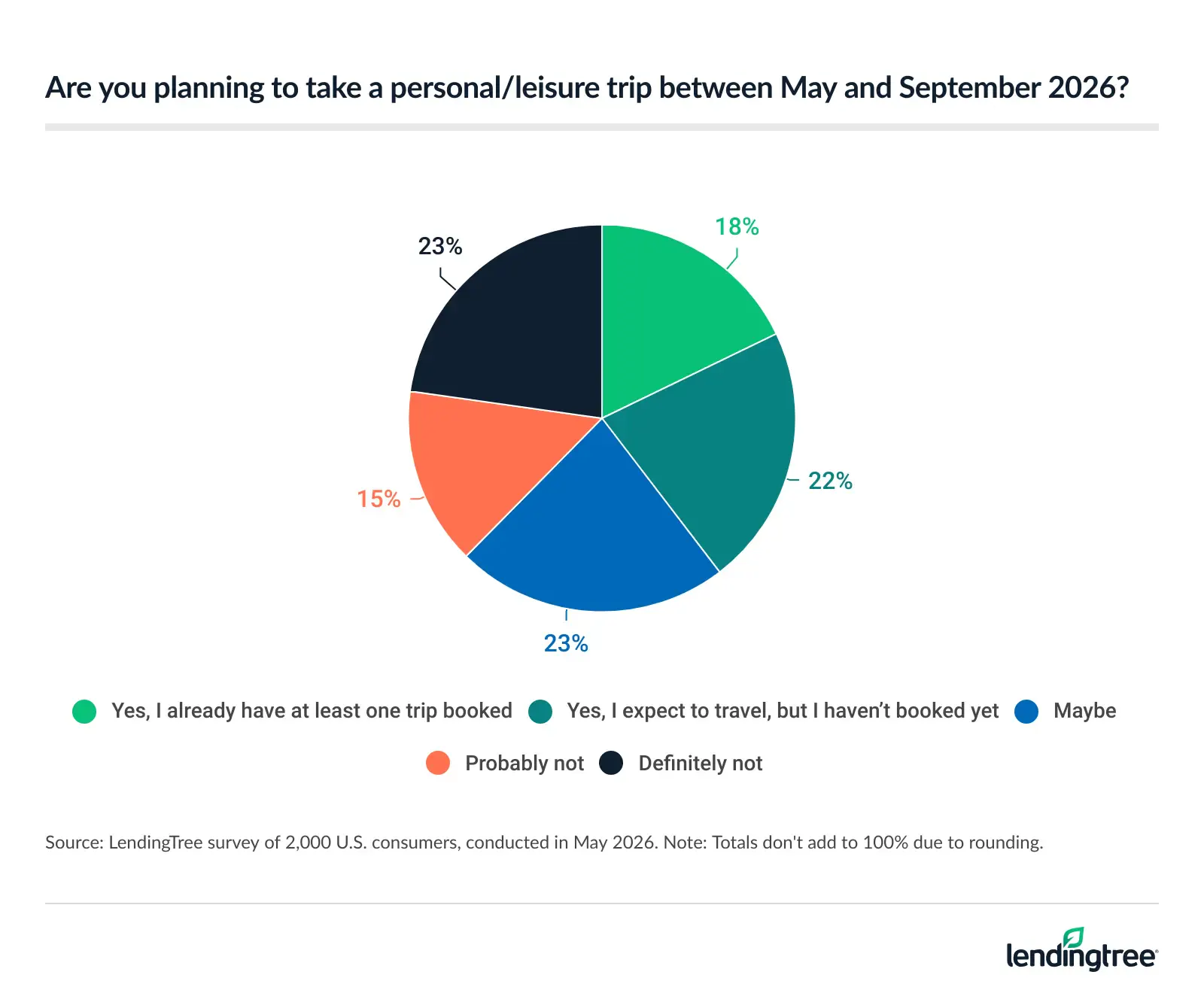
- The hottest destination this summer season might be home. More than a third (37%) of Americans don’t plan to travel for leisure between May and September, including 23% who say they definitely won’t go anywhere. Among those planning to travel, 84% are concerned about affording their ideal trip.
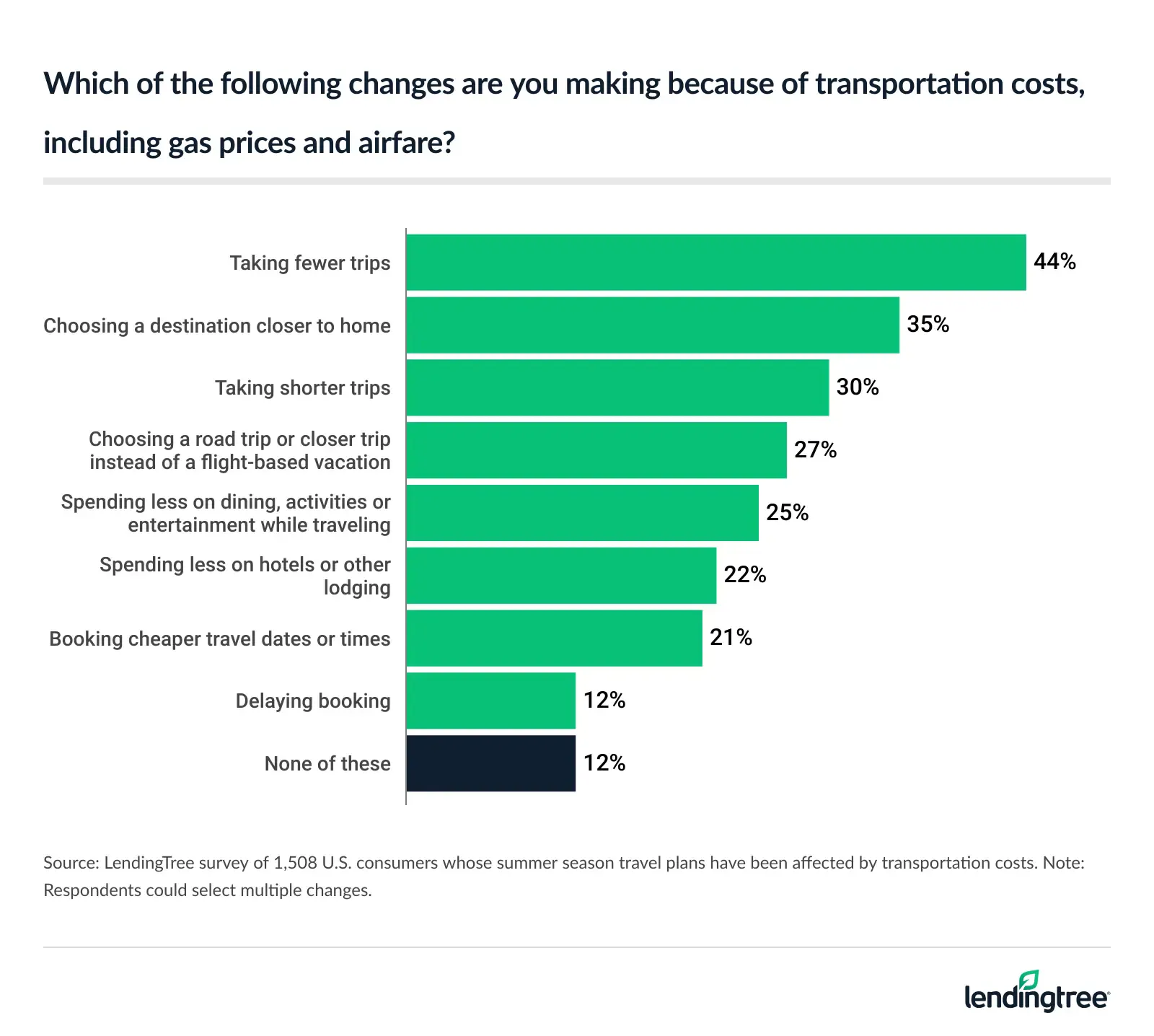
- Transportation costs are a key reason many travelers are rethinking their plans. A striking 75% of Americans say expenses like gas and airfare have impacted their plans, with nearly a third (31%) saying those costs have affected them significantly. Among those whose plans have been affected, 44% will take fewer trips, 35% will choose destinations closer to home and 30% will shorten their stays.
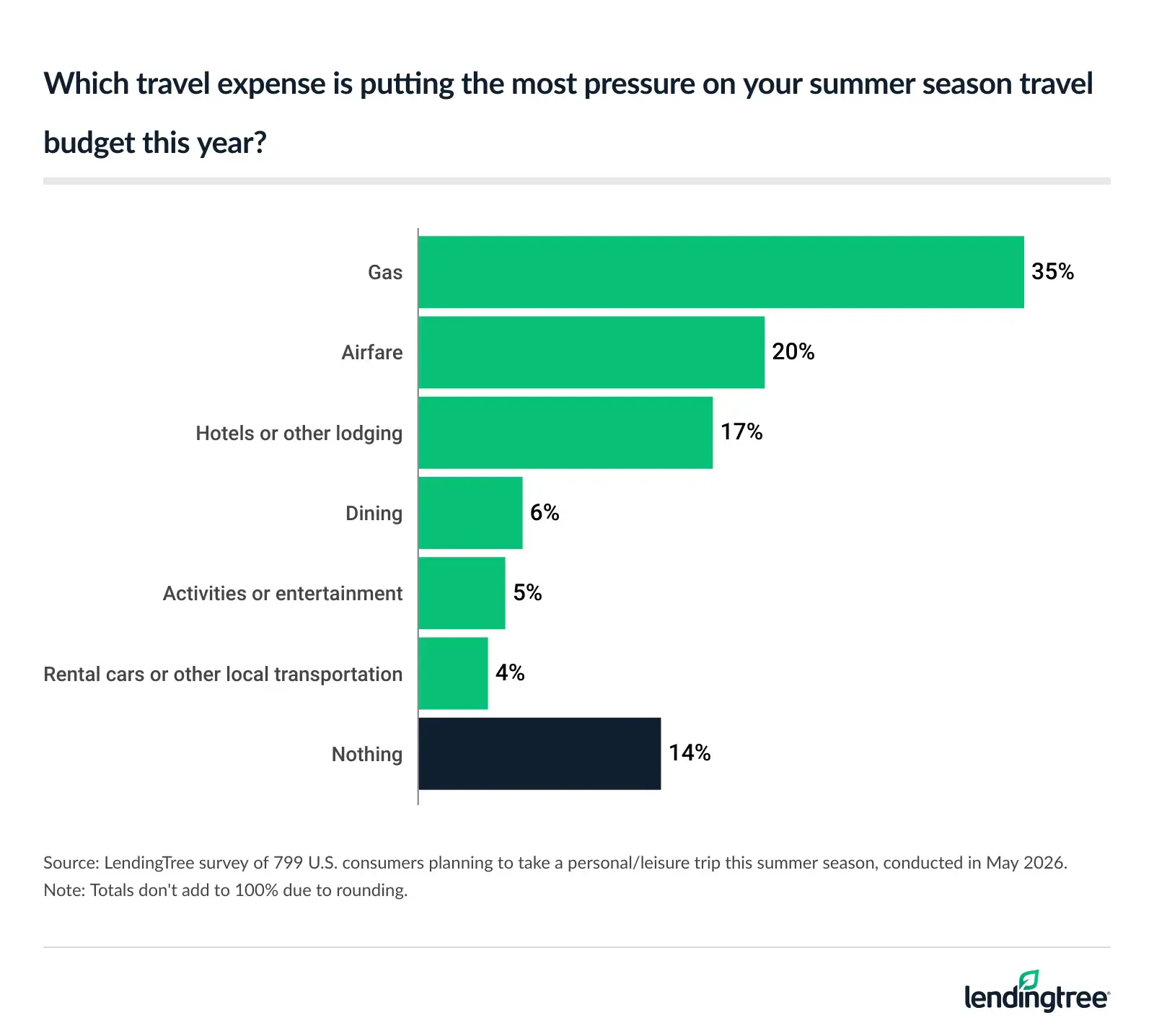
- Americans may still book trips, but sticker shock is likely to come along for the ride. While 40% plan to travel for leisure this summer season, rising costs are reshaping those plans. Gas is the biggest pressure point (35%), followed by airfare (20%) and lodging (17%).
- Travelers are sticking to familiar favorites. Those planning to travel expect to spend $2,607 on average this summer season. Popular destinations include major cities like New York or Los Angeles (23%), beach destinations like Myrtle Beach, S.C. (19%), Disney parks (18%) and national parks such as Yellowstone (15%).
Home is the hottest summer destination
A significant 37% of Americans don’t plan to travel for leisure this summer season, which we defined to respondents as May through September. Nearly a quarter (23%) say they definitely won’t go anywhere. (Nearly 3 in 5, or 58%, of those who earn less than $30,000 a year don’t plan to travel.)
And even among those who plan to travel, the financial anxiety is palpable — 84% are concerned about affording their ideal trip, including 32% who are very concerned. (Concern is highest among Gen Zers ages 18 to 29, of whom 93% are concerned about affording their ideal trip.)
How do you know when to save and when to bite the bullet on travel costs? Matt Schulz — LendingTree chief consumer finance analyst and author of “Ask Questions, Save Money, Make More: How to Take Control of Your Financial Life” — says it’s a balancing act.
“If you have a substantial emergency fund and are secure in your job, dipping a little bit into your savings for a vacation can make all the sense in the world,” he says. “However, if you feel like your financial margin for error is slim to none, you might be better off postponing that vacation for a bit or at least scaling it back. Still, I do believe that taking on a small amount of debt every once in a while for a special occasion, like a dream vacation, is OK. Of course, you don’t want to take on too much debt too often, so caution is key.”
Those who are holding out hope aren’t sitting idle, though. Of those planning to travel, 38% shifted a trip to an earlier date to try to get ahead of potential travel cost increases. And if prices continue to climb, most say they’d adapt rather than cancel, with 27% cutting back on spending during their trip and 25% taking a trip closer to home. Meanwhile, 22% wouldn’t change their plans.
Transportation costs are a common culprit
In the wake of surging gas prices, a significant 75% say expenses like gas and airfare have impacted their plans, with 31% saying those costs have affected them significantly. The effect is widespread, with 44% of those impacted taking fewer trips, 35% choosing closer destinations and 30% shortening their stays. (Important: This question was asked to respondents who said transportation costs affected their travel plans. The prior section, which featured similar responses, was asked to respondents planning summer season trips in general.)
Schulz says those compromises are reasonable. “It all comes down to controlling what you can control and prioritizing what matters most to you,” he says. “The good news is that there are plenty of things you can do to keep costs down, and this data seems to show that people are willing to do them.”
Sticker shock is real among travelers
While 40% plan to travel for leisure this summer season — including 59% of parents with young children, 49% of Gen Zers and 47% of millennials ages 30 to 45 — rising costs are reshaping how and where they go.
Gas is the biggest pressure point, cited by 35% of travelers, followed by airfare (20%) and lodging (17%).
It can be difficult to prioritize spending when every part of the trip feels more expensive, but Schulz believes it boils down to personal preference.
“You need to ask yourself what matters most to you,” he says. “If you want a beach vacation, consider going for a long weekend close to home instead of flying across the country or internationally. If you really want to be pampered, consider staying at a fancy hotel or spa in your hometown. If you want to visit friends or family several states away, ask if you can crash with them instead of staying at a hotel. There are almost always things you can do to reduce travel costs. So much of it comes down to what you’re comfortable doing.”
Most travelers stick to the classics
When it comes to where they’re headed, Americans are gravitating toward tried-and-true favorites. The most popular destinations include major cities like New York or Los Angeles (23%), beach destinations like Myrtle Beach, S.C. (19%), Disney parks (18%) and national parks such as Yellowstone (15%).
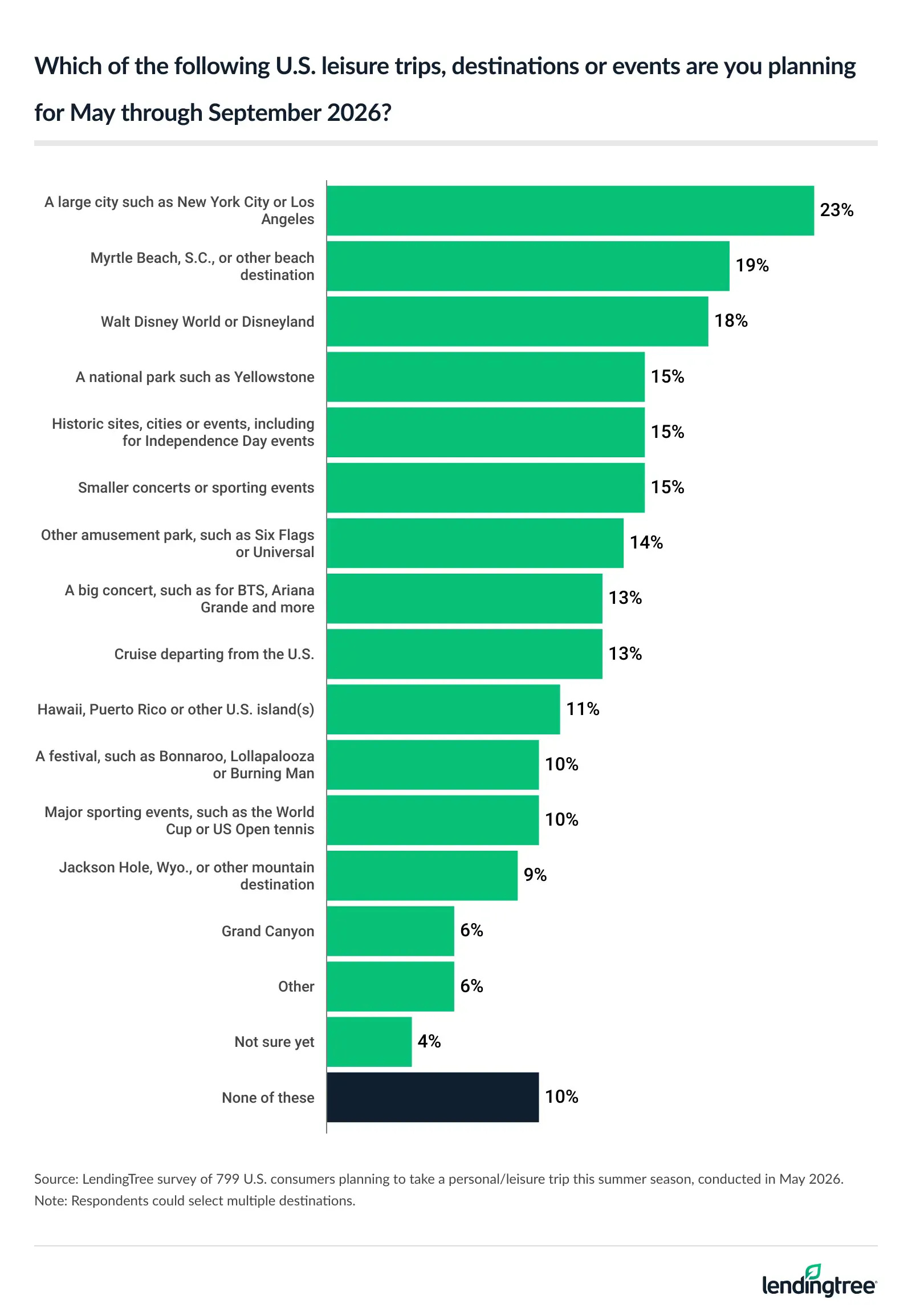
Historic sites, cities or events, including Independence Day celebrations (15%), smaller concerts or sporting events (15%) and other amusement parks, such as Six Flags or Universal (14%), round out the top of the list.
All in all, Americans planning to travel expect to spend $2,607 on leisure travel this summer season, including transportation, lodging, food and activities. Among the demographics analyzed, this ranges from $3,892 among people who earn $100,000 or more a year to $1,396 among people who earn less than $30,000.
Top tips on stretching summer budgets without sacrificing financial health
Summer travel doesn’t have to derail your finances. With travel costs climbing, a little planning and flexibility can go a long way toward helping consumers enjoy a getaway without taking on debt that lingers long after vacation ends. We offer the following advice:
- Set realistic expectations about what fits your budget. “One of the best things travelers can do is set a spending limit before booking anything,” Schulz says. “Crunching the numbers to understand what you can afford is so important. That way, you’re not flying blind and setting yourself up for a pile of debt.”
- Stay flexible. “Traveling shorter distances, driving instead of flying when possible and choosing destinations with lots of lodging and transportation options can help keep costs under control,” he says. “Shopping around can help, too. You don’t have to make yourself miserable to save a few bucks, but leaving yourself extra options can help.”
- Prioritize long-term financial health over short-term splurges. It’s important to remember that a vacation should still fit within your financial goals. Overspending on one trip can create financial stress that lasts for months, especially if balances accrue interest over time. Travelers should try to build in breathing room for unexpected expenses and avoid stretching their finances to keep up with expensive travel trends.
Methodology
LendingTree commissioned QuestionPro to conduct an online survey of 2,000 U.S. consumers ages 18 to 80 from May 4 to 6, 2026. The survey was administered using a nonprobability-based sample, and quotas were used to help ensure the sample reflected the overall population. Researchers reviewed all responses for quality control.
We defined generations as the following ages in 2026:
- Generation Z: 18 to 29
- Millennials: 30 to 45
- Generation X: 46 to 61
- Baby boomers: 62 to 80
Get debt consolidation loan offers from up to 5 lenders in minutes