Americans Are Cutting Football Budgets, but Many Still Expect to Take on Debt


Football is the undisputed king of American sports, but even it isn’t immune to the effects of inflation.
A LendingTree survey found that fewer Americans plan to spend on football-related items and experiences this fall, and about half of those who do expect to spend may take on debt to cover those costs. The economy can be a big reason why.
Still, this year’s drop may reflect a reset rather than a seismic shift. The share of Americans who plan to spend on football is still one percentage point higher than it was in 2024, the first year LendingTree conducted the survey.
Here’s what else we found.
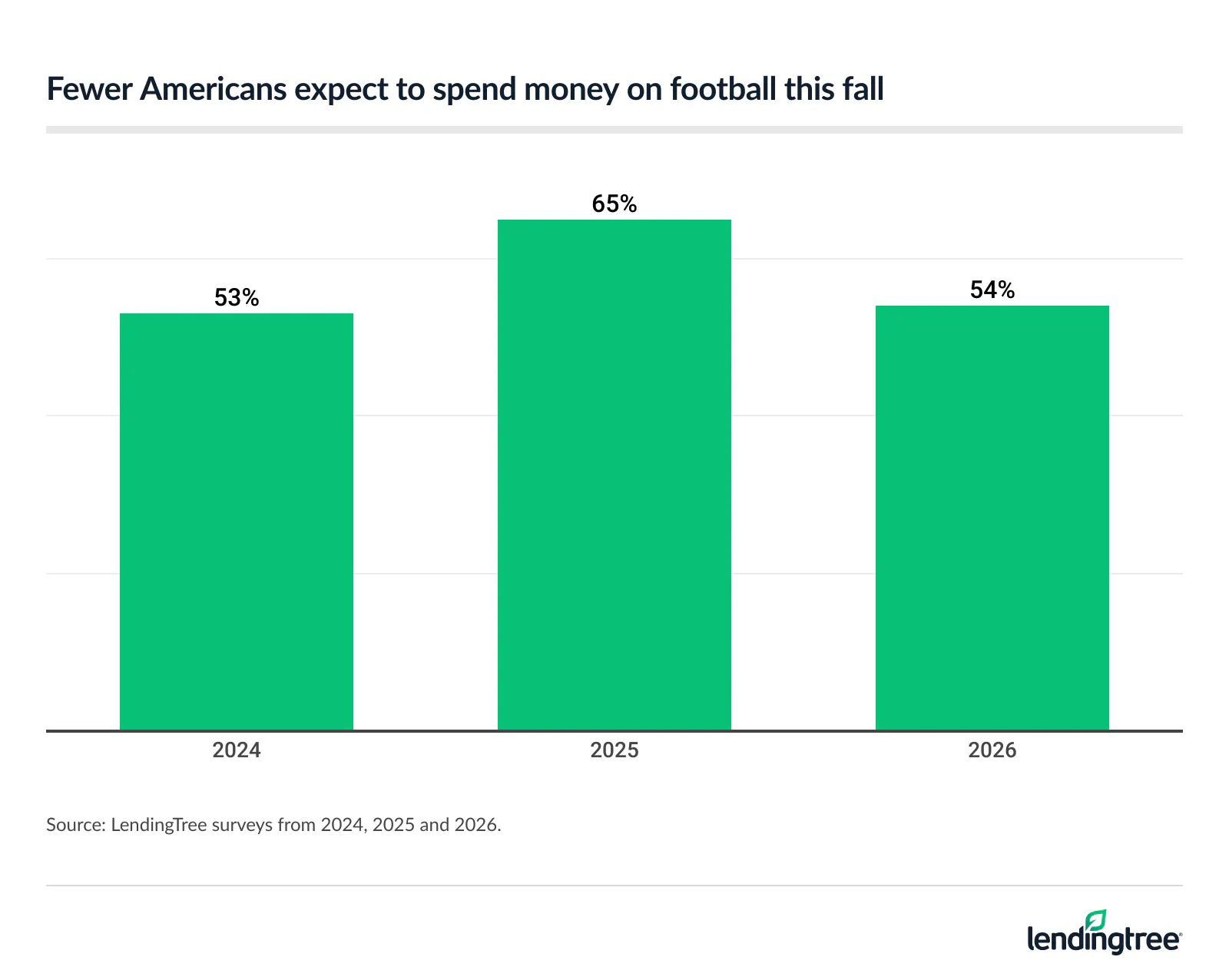
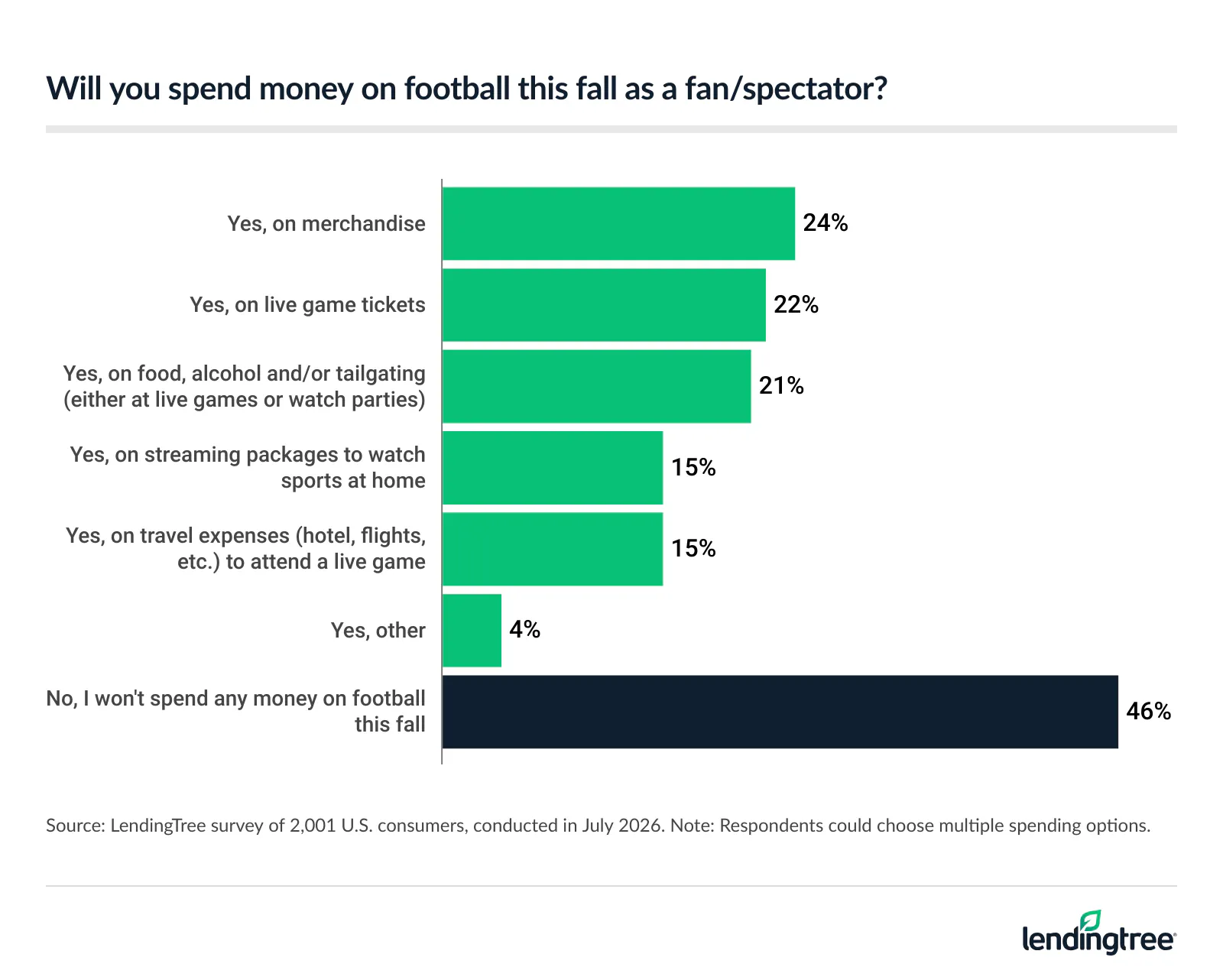
- Just over half of Americans (54%) plan to spend money on football this fall, down from 65% in 2025 but up slightly from 53% in 2024. Among those who plan to spend, 51% say they may take on football-related debt this season, with estimates averaging $416. Merchandise is the most commonly planned expense (24%), followed by live game tickets (22%) and food, alcohol and tailgating (21%).
- Economic pressures are shrinking football budgets, and football spending is creating tension between couples. More than a third of Americans (36%) say they plan to spend less on football this year because of the economy, nearly unchanged from 37% in 2025. Just 13% say they plan to spend more. Nearly 3 in 10 (29%) say they’ve argued with a significant other or partner about their own football spending, including 19% within the past year. Gen Zers are especially likely to report conflict, with 55% saying they’ve argued about either their own football spending or the amount of time they spend watching football.
- Sports betting and fantasy football remain common spending categories, particularly among younger adults. 36% of Americans plan to spend money on sports betting or fantasy football this season, down from 44% last year but up from 30% in 2024. That share climbs to 59% among Gen Zers and 53% among millennials.
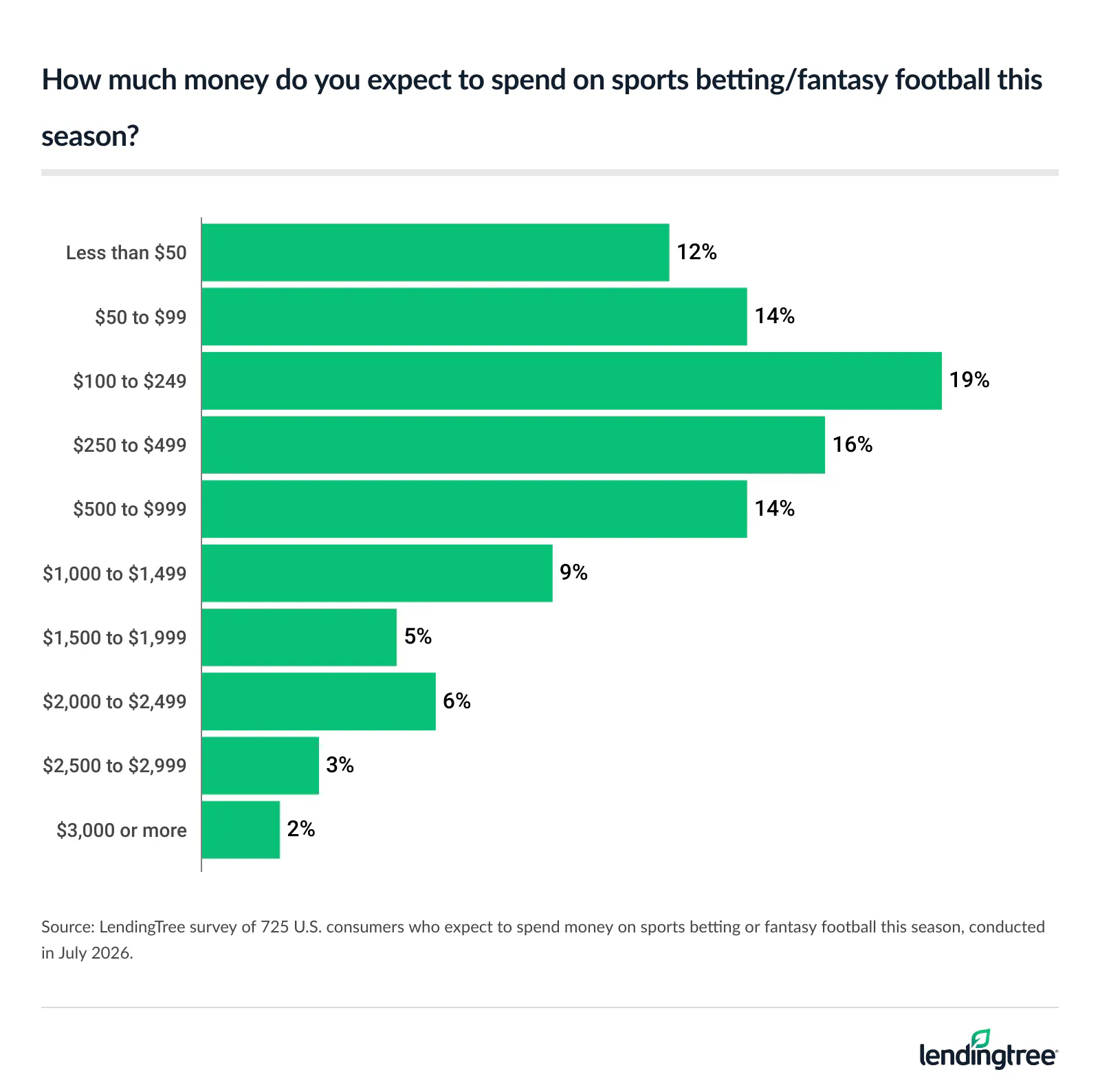
- Some sports bettors aren’t afraid to lose big. Among those who plan to spend on sports betting or fantasy football, 40% plan to spend $500 or more, while just 34% say they’re willing to lose $500 or more. Additionally, 68% expect to spend more on sports betting than on supporting their favorite team.
Just over half of Americans plan to spend money on football this fall, down from 2025 but slightly above 2024
Far fewer Americans expect to spend money on football this fall than last year. The survey found that 54% plan to spend money on football this fall. That’s down 11 percentage points from last year, though it’s still one percentage point higher than in 2024.
Among those who plan to spend on football this season, 51% say they may take on debt, with an average expected debt of $416. Merchandise (24%) is the most common planned expense, followed by live game tickets (22%) and food, alcohol and tailgating (21%).
The younger you are and the higher your income, the more likely you are to say you’ll spend money on football this fall. However, parents of young children are more likely than any age group, gender or income level we tracked to say they’ll spend on football this fall, with 75% saying so.
Economic pressures are shrinking football budgets, and football spending is creating tension between couples
While a slight majority of Americans (51%) say the economy won’t affect their football-related spending this year, Americans are nearly three times as likely to say the economy will cause them to spend less on football (36%) than to say they’ll spend more (13%).
A year ago, a similar share of Americans said the economy would cause them to spend less on football (37%, versus 36% today). However, a significantly larger share said they’d spend more (19%, versus 13% today), while a far smaller share said the economy wouldn’t affect their spending (44%, versus 51% today).
This year, men are far more likely than women to say the economy will affect their football spending (58% versus 40%). Younger Americans are also far more likely than older adults to say the economy will affect their spending. Nearly two-thirds (63%) of Gen Zers ages 18 to 29 say so, compared with just 35% of baby boomers ages 62 to 80.
Football spending is also creating tension among couples. Nearly 3 in 10 (29%) Americans say they’ve argued with a significant other or partner about their own football spending, including 19% who say those arguments occurred within the past year.
More than half of Gen Zers (55%) say they’ve argued about their own football spending. The same share say they’ve argued about the amount of time they spend watching football. By comparison, just 6% of baby boomers say they’ve argued with a partner about their own football spending.
Sports betting and fantasy football remain common spending categories, particularly among younger adults
The percentage of Americans who plan to spend money on sports betting or fantasy football is down significantly this season.
The survey found that 36% plan to spend on sports betting or fantasy football, down from 44% last year. That decline comes despite the growing visibility of sports betting and fantasy sports through media coverage, sponsorships and other aspects of the sports industry. Even so, this year’s figure remains well above the 30% recorded in 2024.
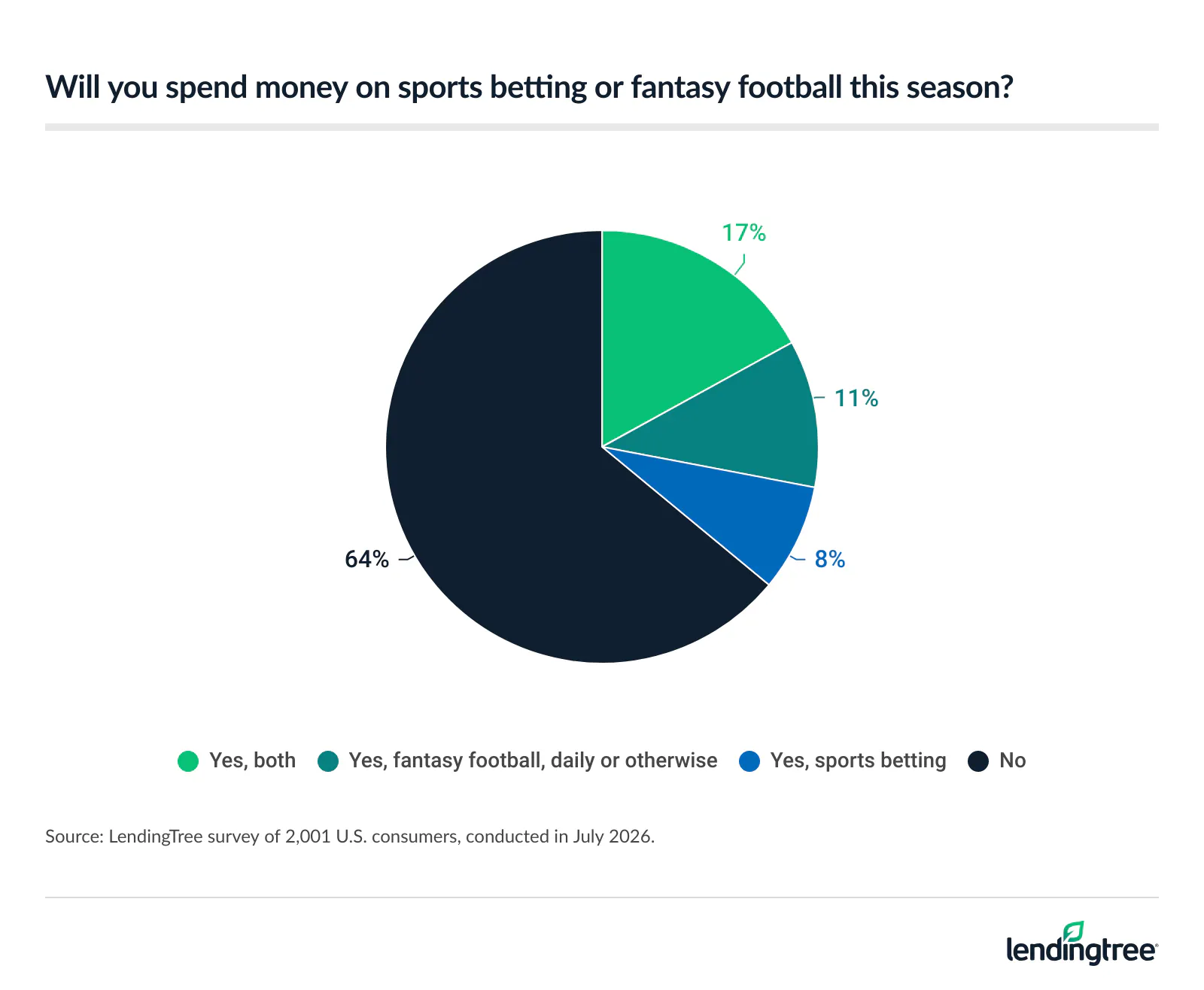
The survey found a wide generational divide in sports betting and fantasy football spending. Nearly 6 in 10 Gen Zers (59%) and 53% of millennials ages 30 to 45 say they plan to spend on those things, while 27% of Gen Xers ages 46 to 61 and just 10% of boomers say the same.
There is also a sizable gender gap, with 49% of men planning to spend on these things, versus just 24% of women. Income also plays a role: 55% of those earning $100,000 or more a year plan to spend on sports betting or fantasy, compared with just 23% of those making less than $30,000 a year.
Some sports bettors aren’t afraid to lose big
More than two-thirds (68%) of people who say they’ll spend on sports betting or fantasy football expect to spend more on those activities than on supporting their favorite team. Our survey shows that 40% plan to spend $500 or more this season, including 25% who plan to spend $1,000 or more.
We also asked this group how much money they’d be willing to lose this season. About a third (34%) say they’re willing to lose $500 or more, including 22% who say they’re willing to lose $1,000 or more.
Men are more likely than women to spend $500 or more (42% versus 36%) and to be willing to lose $500 or more (37% versus 27%).
Make your football budget work for you
Football season can be expensive, but planning ahead can help you enjoy the games without creating financial stress later.
- Prioritize the experiences that matter most: If inflation is squeezing your budget, you don’t have to give up football altogether. Choose the one or two things you’ll enjoy most, and scale back elsewhere.
- Treat sports betting like entertainment, not an investment: Only wager money you’ve already decided you’re comfortable losing. Setting a firm betting budget before the season begins can help keep losses from spilling into other financial priorities. It may seem weird to have a line item for sports betting in your budget, but it shouldn’t. If you’re passionate about it and spend significant amounts of money on it, you should budget for it.
- Talk about spending before it becomes an argument: If you share finances with a partner, discuss expectations before the season gets underway. It may make for some awkward conversation across the dinner table, but agreeing on a budget ahead of time can help prevent misunderstandings later.
- Lower the interest rate on your debt as soon as possible: If you take on football-related debt, consider a 0% balance transfer credit card. You’ll likely need good credit to get one, but it can be a game-changer if you can. If you can’t qualify for one of those, a low-interest personal loan can be a great choice, too. Whatever you do, don’t just settle for paying the interest rate that you have right now. You have more power over those rates than you think you do.
Methodology
LendingTree commissioned QuestionPro to conduct an online survey of 2,001 U.S. consumers ages 18 to 80 from July 2 to 8, 2026. The survey was administered using a nonprobability-based sample, and quotas were used to help ensure the sample reflected the overall population. Researchers reviewed all responses for quality control.
Generations were defined as the following age groups in 2026:
- Generation Z: 18 to 29
- Millennials: 30 to 45
- Generation X: 46 to 61
- Baby boomers: 62 to 80
Get debt consolidation loan offers from up to 5 lenders in minutes