Transportation Costs Push 81% of Americans to Change Their Behavior


Rising gas prices, car insurance premiums and maintenance costs have made vehicle ownership more expensive than ever — and it’s changing how Americans get around.
According to a LendingTree survey of 2,001 U.S. consumers, the vast majority say they’ve altered their habits over the past year in response to transportation costs, from combining errands into fewer trips to carpooling with people outside their household.
Here’s a closer look at how Americans are adjusting to the cost of getting around.
- 54% of drivers have changed how much they drive. Compared to a year ago, 34% say they drive more, while 20% say they drive less. Among those driving less, the top reasons are gas prices (64%), health or disability (24%) and changes in household finances (20%).
- Transportation costs are changing driving habits. Over the past 12 months, 81% of Americans say they’ve made changes due to the cost of driving or transportation. The most common changes include combining errands into fewer trips (38%), driving less overall (31%) and searching for cheaper gas before filling up (28%).
- Nearly 3 in 10 Americans have carpooled about once a week or more over the past year. Overall, 29% of Americans report carpooling about once a week or more, with the practice especially common among Gen Zers (52%). In addition, 51% say they’d be likely to carpool if they regularly traveled to the same destination as someone outside their household.
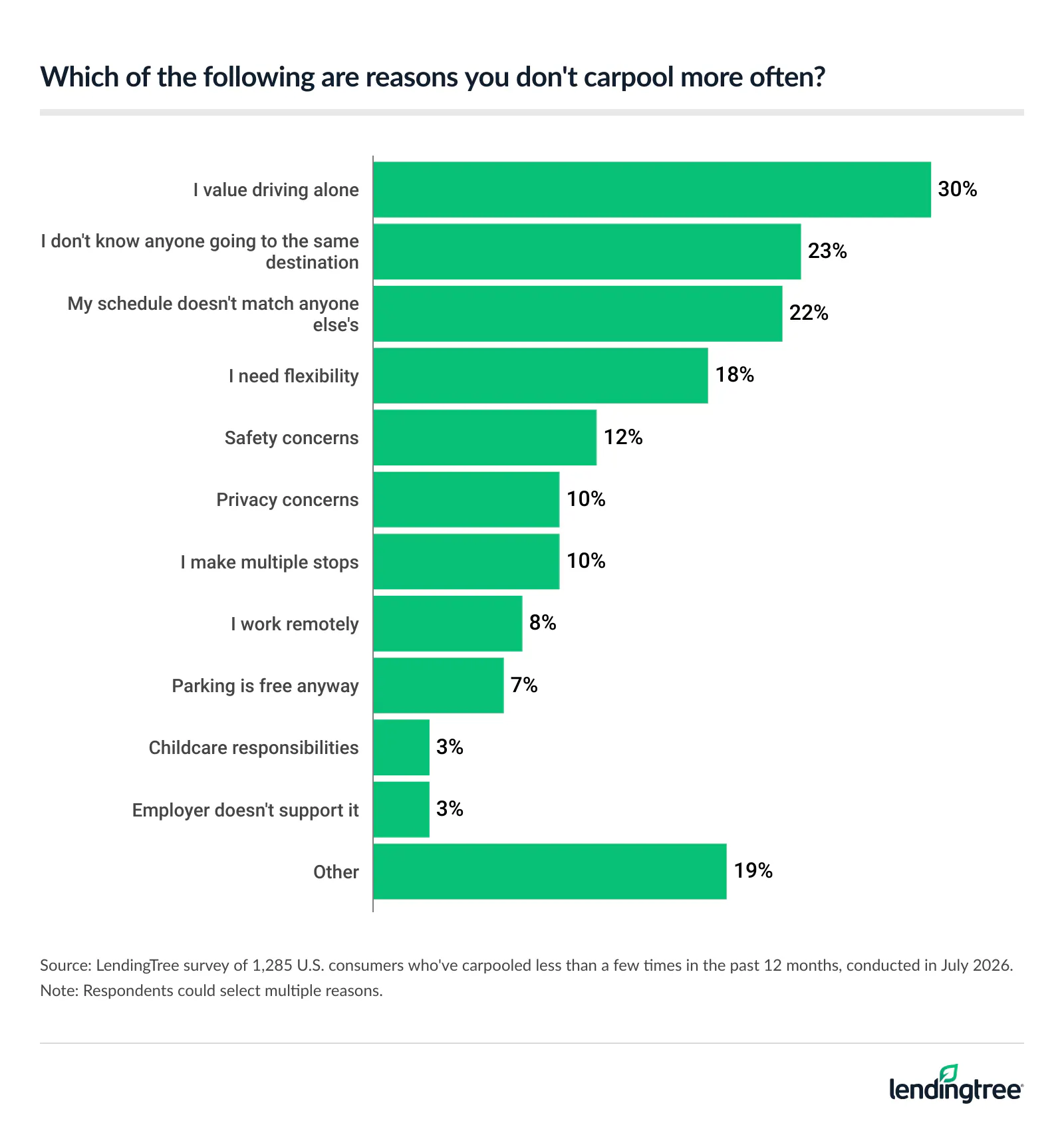
- Carpooling isn’t feasible for everyone. Overall, 39% of Americans say they’ve never carpooled. Among those who don’t carpool often, the most commonly cited reasons are preferring to drive alone (30%), not knowing anyone traveling to the same destination (23%) and having schedules that don’t align with someone else (22%).
More than half of drivers have changed how much they drive
More than half (54%) of drivers have changed how much they drive over the past year, with 34% driving more and 20% driving less.
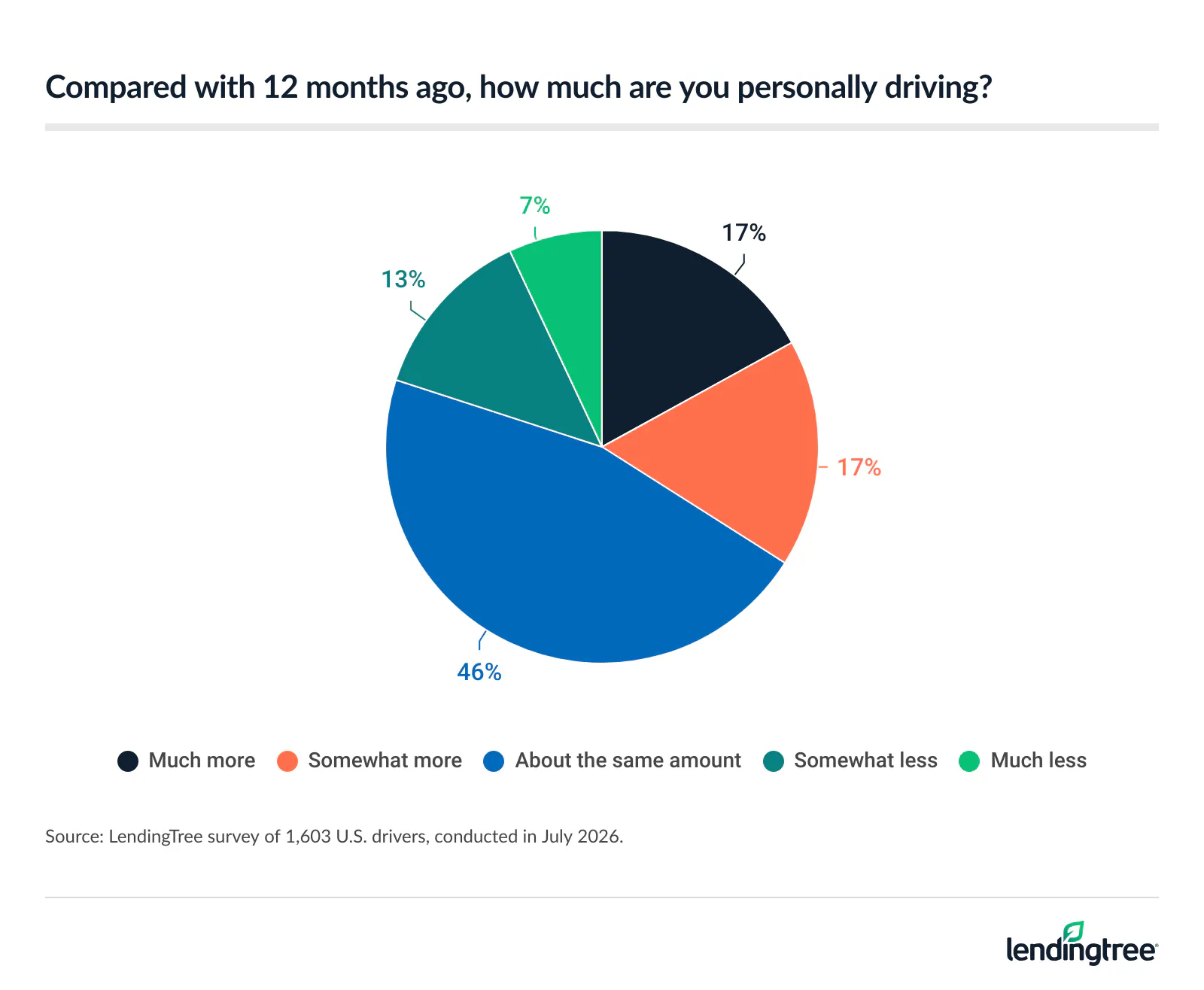
Among those driving less, gas prices are the top reason, with 64% citing this. Health or disability (24%) and changes in household finances (20%) follow. Maintenance or repair costs (14%) and car insurance costs (14%) round out the top reasons.
Meanwhile, 56% of Gen Zers ages 18 to 29 and 52% of parents of children younger than 18 are driving more than they were a year ago — the only demographics in which a majority say they’re driving more. Among those driving more, the top reasons are gas prices (54%) and car insurance costs (28%). Additionally, 26% say a vehicle purchase has led them to drive more.
Matt Schulz, LendingTree chief consumer finance analyst and author of “Ask Questions, Save Money, Make More: How to Take Control of Your Financial Life,” believes these swings say a lot about how Americans view driving as another line item in the household budget.
“When gas prices and other transportation costs rise, many people respond by cutting unnecessary trips, while others drive more because life gives them little choice,” he says. “As much as people would love to be more flexible with their driving habits, sometimes it isn’t possible.”
For those whose habits have shifted significantly in either direction, Schulz says there are a few things worth keeping in mind. “If you’re driving more, make sure you’re budgeting for the additional gas costs and keeping up with regular maintenance,” he says. “Those extra miles put additional wear on a vehicle over time. If you’re driving much less, it may be worth reviewing your insurance policy to see whether driving fewer miles each year qualifies you for a discount.”
Transportation costs are changing driving habits
Over the past year, 8 in 10 (81%) Americans have changed their driving or transportation habits due to costs. Common changes include combining errands into fewer trips (38%), driving less overall (31%) and searching for cheaper gas before filling up (28%).
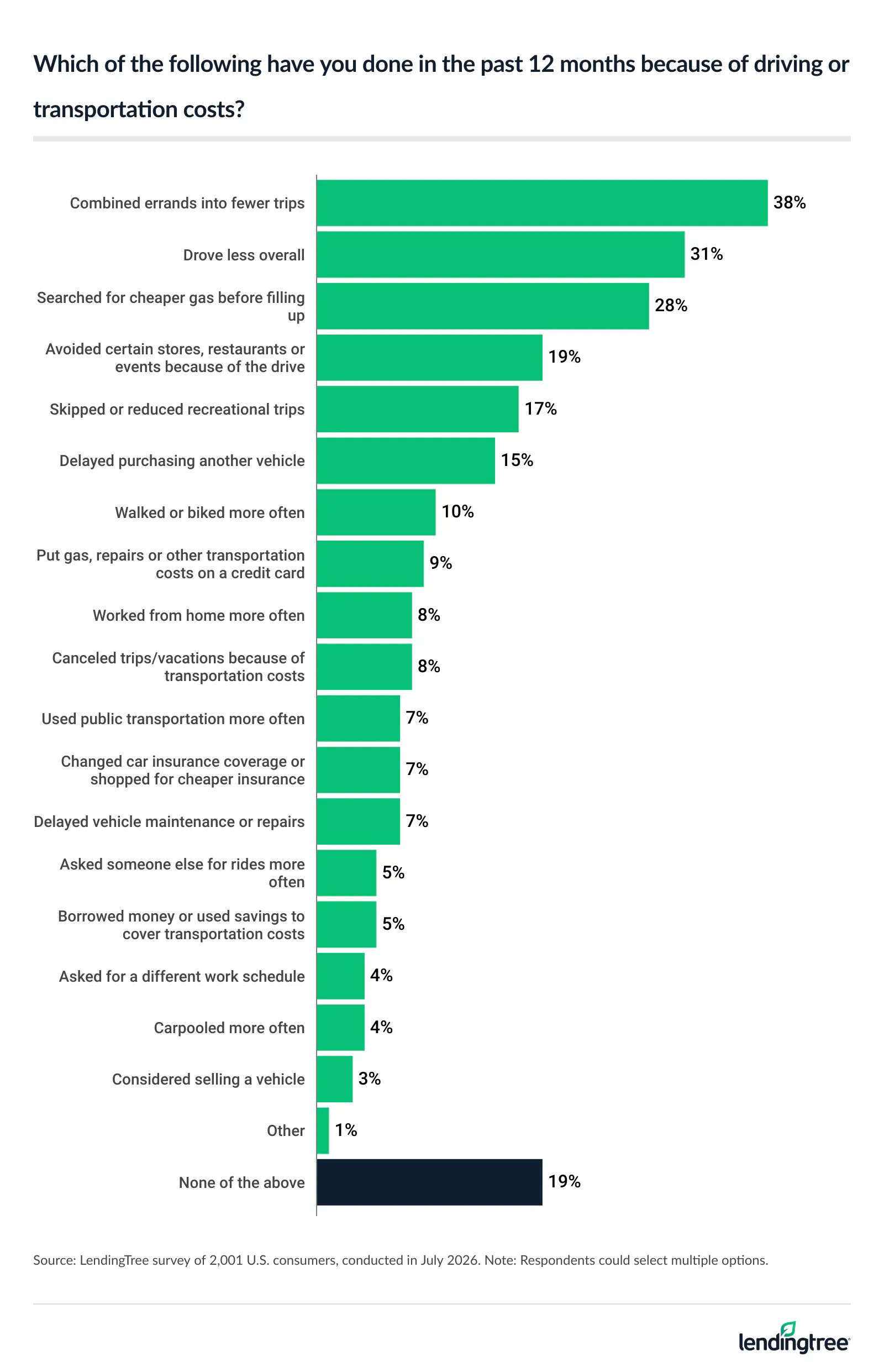
Some Americans have gone even further by avoiding certain stores, restaurants or events because of the drive (19%), skipping or reducing recreational trips (17%) and delaying the purchase of another vehicle (15%).
Schulz says Americans are generally on the right path if they’re trying to maximize savings.
“Combining errands is often one of the simplest and most effective ways to save because it reduces both fuel consumption and wear and tear on your vehicle,” he says. “Plus, all it usually requires is a little bit of advance planning. Shopping around for lower gas prices also adds up over time, especially if you’ve got a long commute.”
However, Schulz says drivers shouldn’t overlook the savings that come from regular maintenance. “Simple things like keeping tires properly inflated and regularly having oil changes can help you avoid major issues in the short term and extend the vehicle’s life in the long term,” he says.
Households are also feeling the squeeze when it comes to monthly transportation costs. Overall, 30% spend less than $100 on transportation each month, 26% spend $100 to $249 and 20% spend $250 to $499. Another 14% spend $500 to $999, while 10% spend $1,000 or more per month on transportation.
Nearly 3 in 10 Americans carpool about once a week or more
Nearly 3 in 10 (29%) Americans carpool about once a week or more, a habit that’s especially common among Gen Zers (52%).
Overall, 51% of Americans say they would be likely to carpool if they regularly traveled to the same destination as someone outside their household. The same share also views carpooling positively.
Schulz says the benefits of carpooling go well beyond what it saves at the pump.
“Carpooling isn’t just about lower fuel costs — it reduces the number of vehicles on the road and the emissions in the air,” he says. “It can also help make commuting less stressful by allowing you to enjoy some company during the drive. Still, carpooling isn’t for everyone. For busy parents, for example, that commute may be the only quiet time they get to themselves. Also, any time multiple people are involved, it’s important to set expectations up front. Having conversations about pickup times, driving schedules and other details ahead of time helps ensure that things go smoothly.”
How do most Americans get around?
Overall, 68% of Americans drive and have regular access to a vehicle, and 73% of drivers get behind the wheel at least four to six times a week. When asked about the transportation options they use in a typical month, most Americans say they drive themselves (65%), followed by walking (29%), riding as a passenger with someone in their household (26%) and using public transportation (14%).
Nearly 4 in 10 Americans have never carpooled
Despite its benefits, carpooling isn’t feasible for everyone. Overall, 39% say they’ve never carpooled. Among those who don’t carpool often, the top reasons are preferring to drive alone (30%), not knowing anyone traveling to the same destination (23%) and having schedules that don’t align with someone else (22%).
Schulz says carpooling tends to work best under specific conditions.
“Carpooling works best when routines are predictable and aligned,” he says. “People who commute to the same workplace or attend the same school are often the best candidates because their schedules naturally sync up. If you don’t know any potential carpool partners, many employers, universities and local community groups offer ride-matching programs that can help connect people with similar routes. At the same time, it’s important to recognize that carpooling isn’t practical for everyone. If your schedule changes frequently or you need flexibility throughout the day, the convenience of driving alone may outweigh the potential savings.”
He also has sympathy for the drive-alone crowd. “If you can handle the costs, the extra effort involved with driving by yourself can be worth it,” he says. “That’s because being locked in a car with people you might not know well can be every bit as stressful as any other hazard you might find on the roads.”
Making every mile count: Top expert tips on reducing travel costs
With transportation costs continuing to put pressure on household budgets, small changes in how you drive and maintain your vehicle can add up to meaningful savings. Consider the following advice:
- Be intentional with every trip. “A little bit of forethought can go a long way,” Schulz says. “Something as simple as combining errands when possible can lead to real savings.”
- Don’t cut corners on safety just to save money. “Delaying necessary repairs or driving on worn tires can lead to much bigger expenses down the road,” he says. “The best transportation savings come from reducing unnecessary costs while protecting the reliability and safety of your vehicle.”
- Lower your transportation costs beyond the pump. Fuel isn’t the only driving expense. If you’re shopping for a vehicle or looking to reduce your monthly costs, comparing auto loan offers could help you secure a lower rate and keep more money in your pocket.
Methodology
LendingTree commissioned QuestionPro to conduct an online survey of 2,001 U.S. consumers ages 18 to 80 from July 2 to 8, 2026. The survey was administered using a nonprobability-based sample, and quotas were used to help ensure the sample reflected the overall population. Researchers reviewed all responses for quality control.
Generations were defined as the following age groups in 2026:
- Generation Z: 18 to 29
- Millennials: 30 to 45
- Generation X: 46 to 61
- Baby boomers: 62 to 80
Get auto loan offers from up to 5 lenders in minutes