Halloween Spending Expected to Drop to $162 as Economic Uncertainty Haunts Budgets


Fewer Americans say they’ll spend on Halloween-related purchases this year, and those who do expect to spend significantly less than last year.
That’s the sobering news from LendingTree’s 2026 Halloween spending survey, which also found that nearly 1 in 4 people who plan to celebrate the holiday this year will probably take on debt to do so.
Here’s more of what we found.
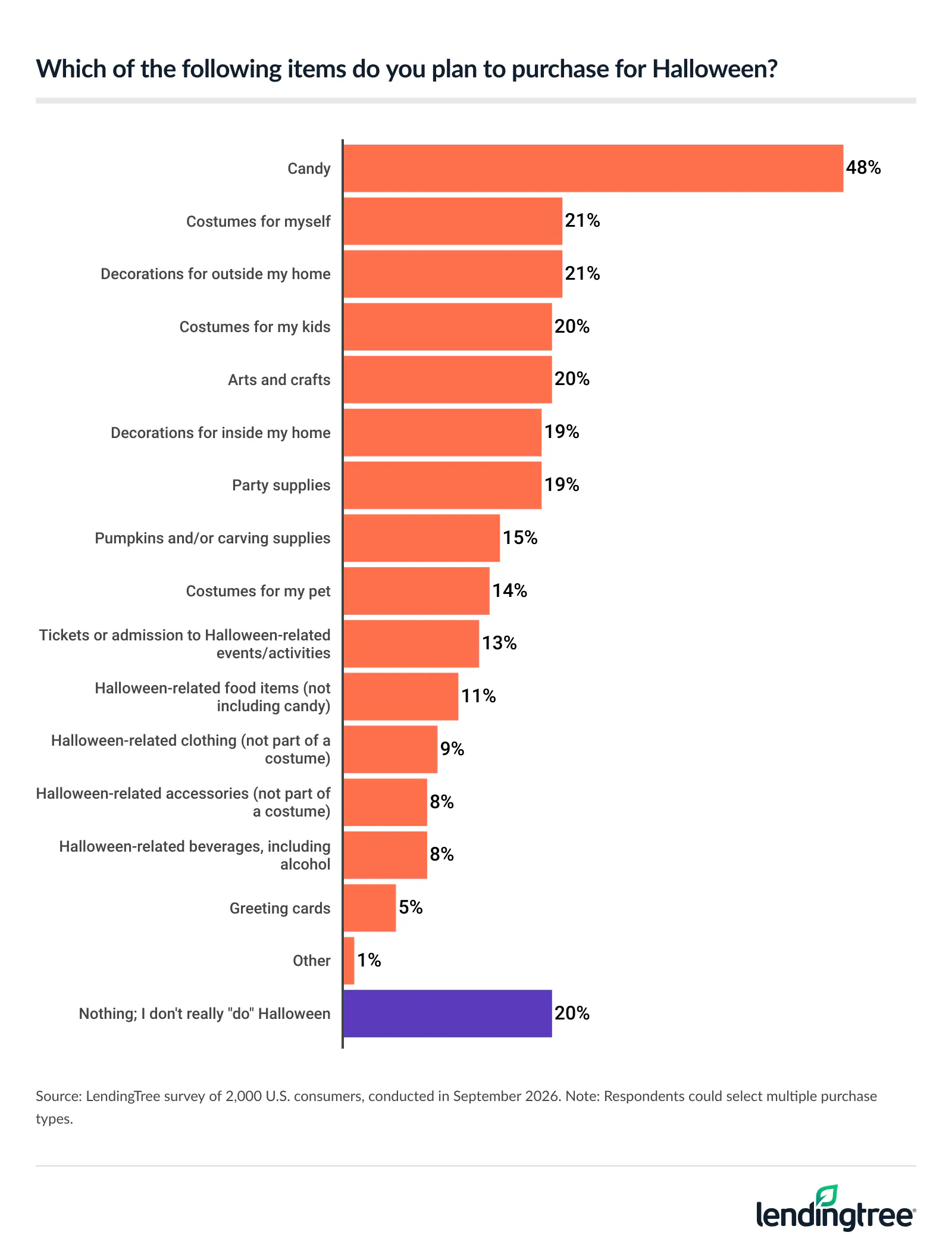
- Fewer Americans say they’ll spend on Halloween this year. 4 in 5 Americans (80%) plan to make a Halloween-related purchase this year, down from 90% last year but unchanged from 2024. Candy tops Americans’ shopping lists (48%), followed by costumes for themselves (21%), outdoor decorations (21%) and children’s costumes (20%).
- Spending is expected to fall sharply among those who’ll celebrate. Celebrators expect to spend an average of $162 on Halloween this year, down from $192 in 2025 and $172 in 2024. Some celebrators expect to spend considerably more, including six-figure earners at $311, parents of young children at $269 and millennials at $225. Americans handing out candy expect to shell out $73 on treats alone.
- Halloween budgets are getting pulled in two directions. Nearly 4 in 10 celebrators (38%) expect to spend more this year than last, including 58% of parents with children younger than 18, 52% of Gen Zers and 49% of millennials. At the same time, 61% say economic uncertainty is leading them to skip some Halloween purchases, most often candy (35%), decorations (31%) and costumes (29%).
- Halloween debt is still lurking. More than a third of Halloween celebrators (35%) say they’ve gone into debt for the holiday, while nearly 1 in 4 (24%) expect to do so this year. Gen Zers (43%), parents of children younger than 18 (40%) and millennials (35%) are among the groups most likely to expect to take on Halloween debt this year.
Fewer Americans say they’ll spend on Halloween this year
Americans love Halloween, and our survey found that 80% plan to make at least one Halloween-related purchase this year. We’ve seen that percentage fluctuate significantly in the past three years. While 80% expect to spend this year, the figure was 90% just a year ago. In 2024, however, it was also 80%.
In 2026, the younger you are and the higher your income, the more likely you are to say you’ll spend money on Halloween. Additionally, 93% of parents with kids younger than 18 say they’ll spend money on Halloween this year.
The most popular item this Halloween likely won’t surprise you. Nearly half of Americans (48%) say they’ll spend on candy, while 21% say they’ll spend on costumes for themselves, 21% on outdoor decorations and 20% on children’s costumes.
Spending is expected to fall sharply among those who’ll celebrate
While most Americans will spend on Halloween this year, they expect to spend less than in recent years — and far less than just a year ago. In 2026, celebrators expect to spend an average of $162 on Halloween. In 2025, the average was $192, and in 2024, $172.
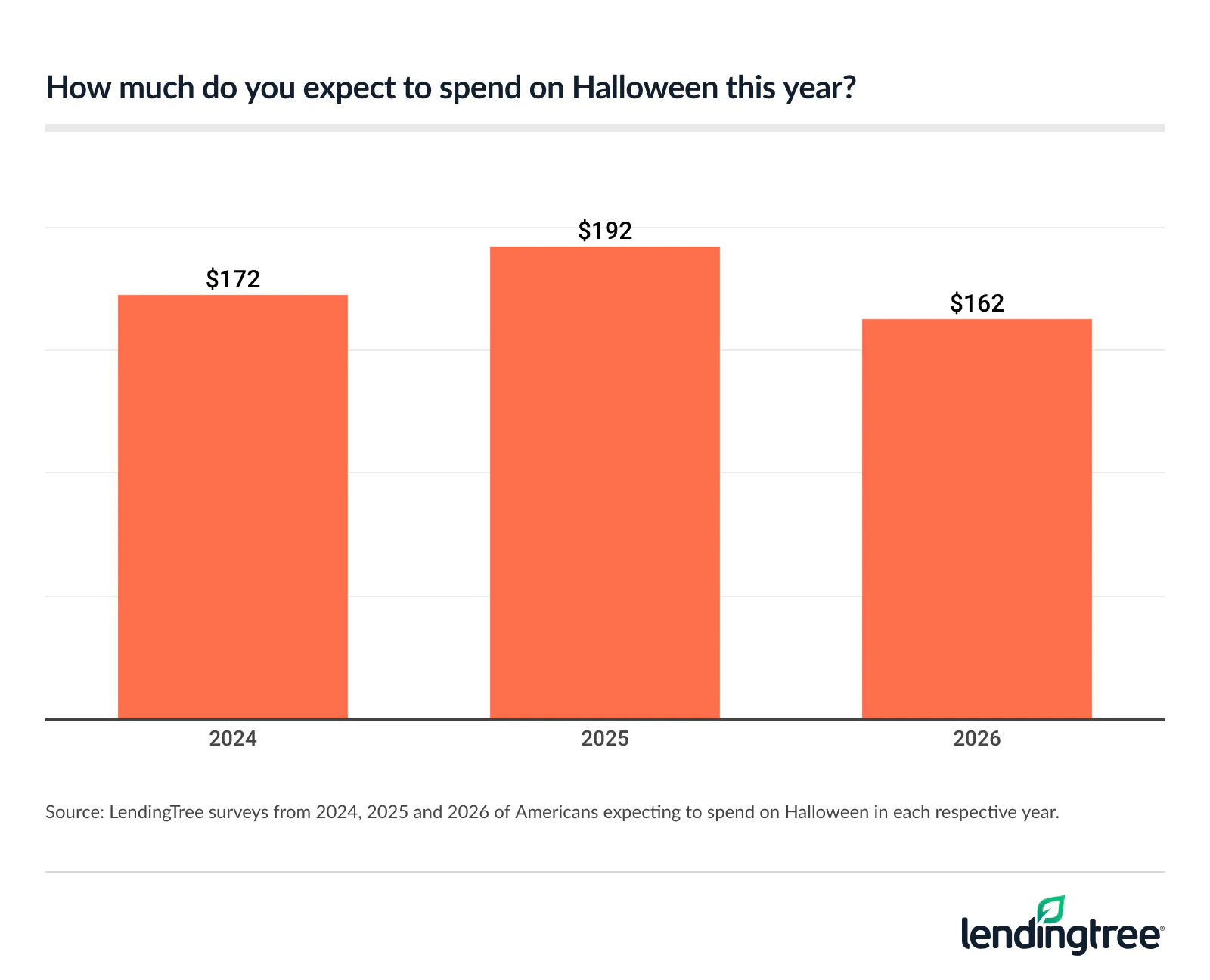
That’s a 16% pullback in spending from last year, but it likely feels like more to those celebrating Halloween. Rising costs in 2026 have eaten into Americans’ purchasing power, so they may need to spend more today to buy the same items they bought a year ago.
Among those spending this Halloween, we saw significant differences among demographic groups. Those earning at least $100,000 expect to spend $311, while parents of children younger than 18 expect to spend $269 and millennials ages 30 to 45 expect to spend $225, the highest of any age group. Meanwhile, those earning less than $30,000 expect to spend $103, people with no kids expect to spend $126, and baby boomers ages 62 to 80 expect to spend just $64. Men also expect to spend nearly twice as much as women ($213 versus $111).
When asked specifically about how much they’ll spend on candy to hand out to trick-or-treaters, respondents said they’re willing to spend $73. Six-figure earners ($105), Gen Zers ages 18 to 29 ($102) and parents of young kids ($101) were the only demographic groups we analyzed expecting to spend $100 or more on candy.
Halloween budgets are getting pulled in 2 directions
Though Halloween spending is expected to fall this year, not everyone celebrating is slashing their budget.
Almost 4 in 10 celebrators (38%) expect to spend more in 2026 than they did in 2025. That includes 58% of parents with kids younger than 18, 52% of Gen Zers and 49% of millennials. Men are much more likely than women to say they’ll spend more (46% versus 30%).
Still, 85% of Americans who will celebrate Halloween say they’re taking at least one step to save money on the holiday this year. The most common moves are buying fewer Halloween items overall (23% of celebrants) and setting a Halloween spending budget (22%).
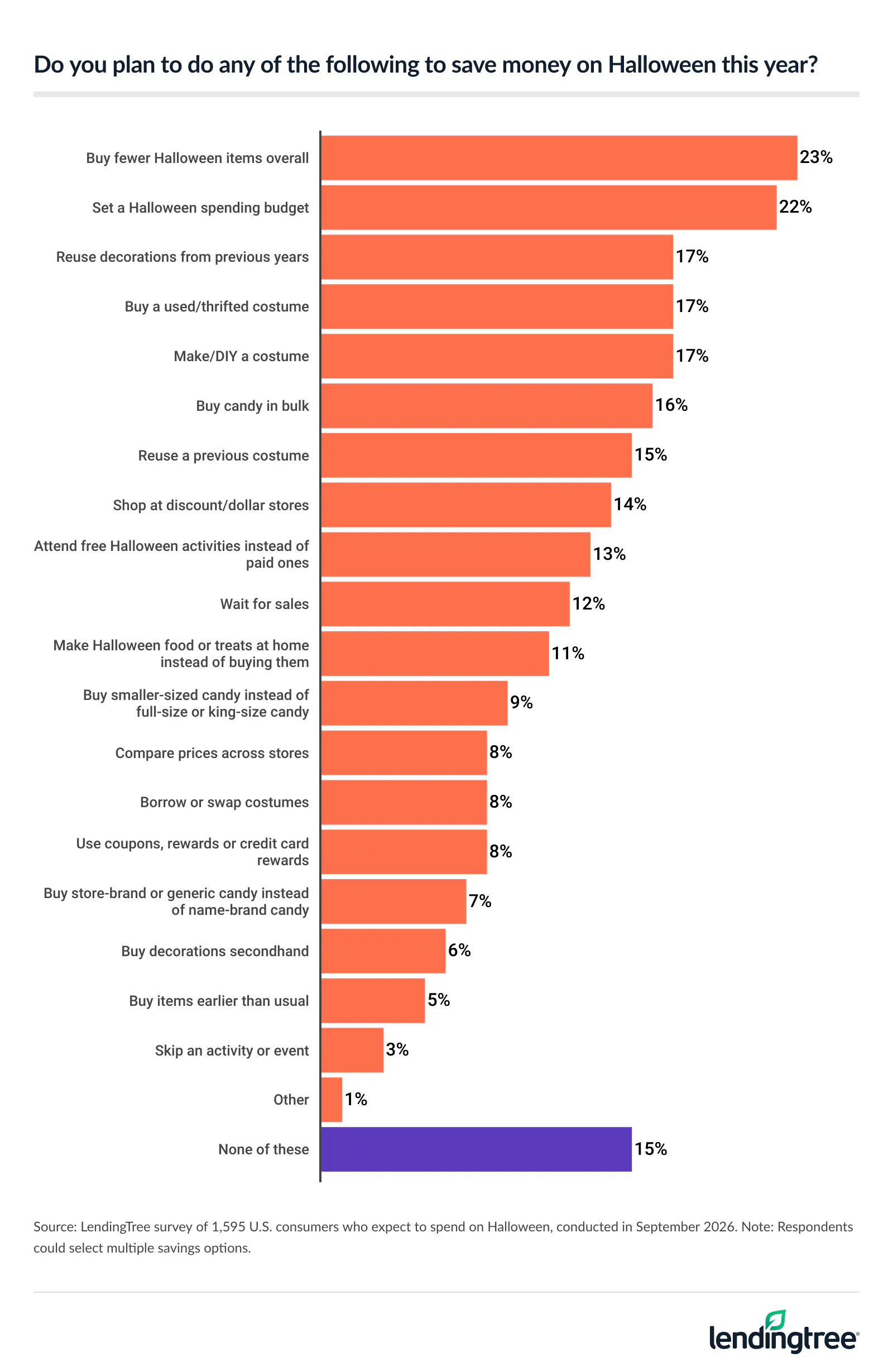
In a separate question, 61% of Halloween celebrants say they plan to skip some purchases because of economic uncertainty — most often candy (35%), decorations (31%) and costumes (29%). That includes 81% of Gen Zers, 75% of parents with young children and 71% of men.
Halloween debt is still lurking
When you mix rising prices with Americans’ passion for Halloween, some consumers may take on debt to celebrate. Our survey found that 35% of Halloween celebrants have gone into debt for the holiday in the past, and 24% expect to do so this year.
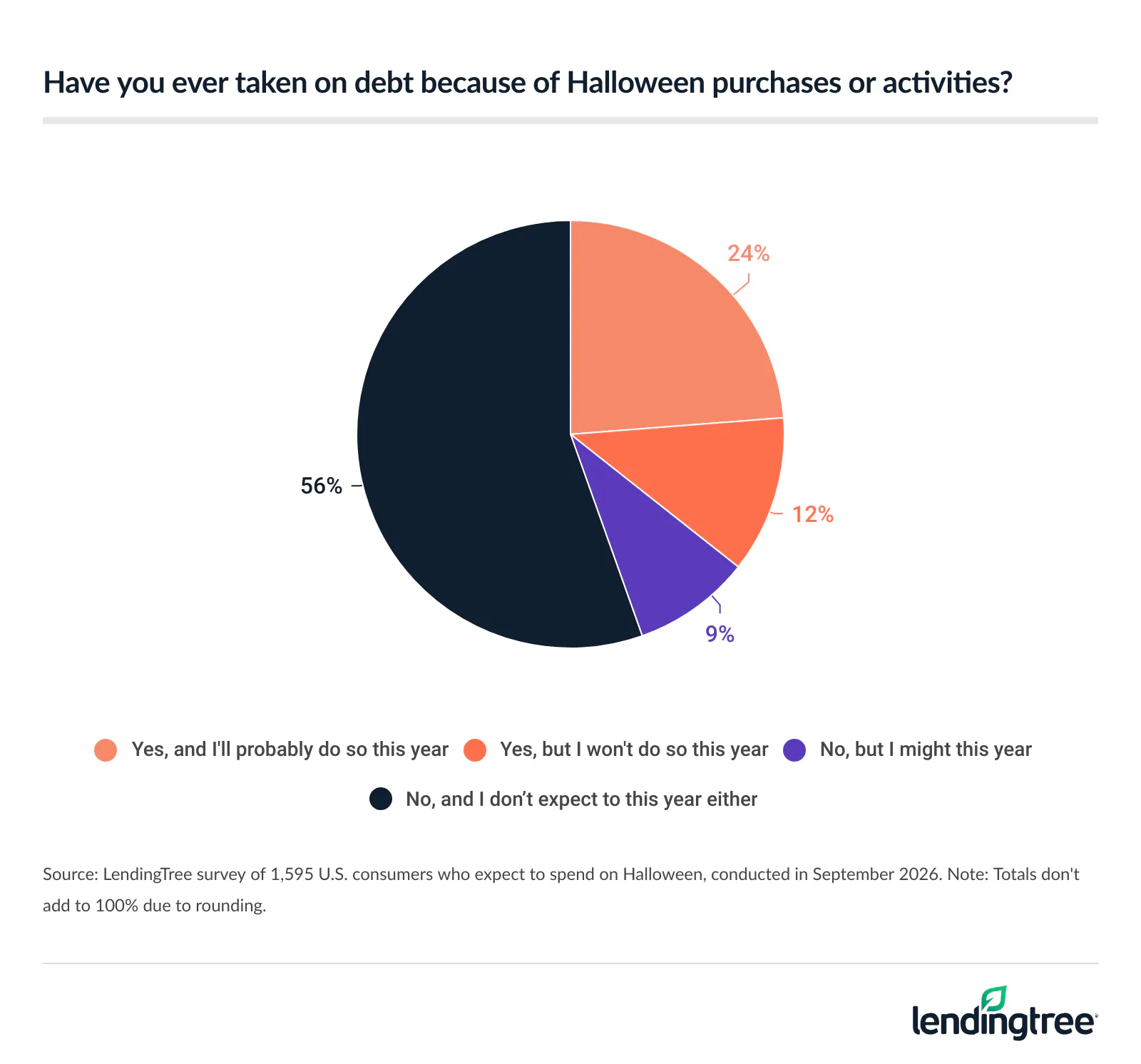
The younger you are, the more likely you are to take on Halloween debt this year: 43% of Gen Z Halloween celebrants expect to do so, as do 35% of millennials, while 14% of Gen Xers ages 46 to 61 and just 2% of boomers say the same. Additionally, 40% of parents with children younger than 18 expect to take on Halloween debt this year.
The survey also found that the higher your income, the more likely you are to expect to take on Halloween debt.
More than half (51%) of those who’ve taken on Halloween debt say they regret overspending. The two biggest reasons they cited were pressure to keep up with the Joneses and higher-than-expected prices.
Smart ways to manage your Halloween spending
Halloween is supposed to be fun. However, not every costume, decoration or bag of candy is worth busting your budget for. A little planning can help you enjoy the holiday without waking up to a financial hangover on Nov. 1.
- Set a budget before you start shopping. Decide how much you’re comfortable spending on costumes, candy, decorations, parties and other expenses. Then work backward from that number. If everything on your wish list doesn’t fit, focus on what matters most to you. The rest probably isn’t worth taking on credit card debt for.
- Don’t let social media do your spending for you. More than 4 in 10 Halloween celebrants (43%) say social media has caused them to spend more on the holiday than they otherwise would. That includes 74% of Gen Zers and 59% of millennials. If something in your feed catches your eye, give yourself a cooling-off period before buying. Even a few extra hours can help you decide whether you really want it or just got caught up in the moment.
- Look for easy ways to save. You don’t have to skip Halloween altogether to cut costs. Reuse decorations, swap costumes with friends or family, buy candy in bulk and compare prices before you shop. If you’re throwing a party, make it a potluck instead of footing the entire bill yourself. Little savings can add up.
- Think twice before taking on card debt. A little debt every once in a while isn’t the end of the world. The key is moderation. If you can pay off your Halloween spending in a month or two, it may be OK to go for it. If you’ll still be paying for Halloween when Valentine’s Day rolls around, that’s a problem.
There’s no one right amount to spend on Halloween. The right number is one that fits comfortably in your budget and doesn’t get in the way of your bigger financial goals.
Methodology
LendingTree commissioned QuestionPro to conduct an online survey of 2,000 U.S. consumers from Sept. 2 to 7, 2026. The survey was administered using a nonprobability-based sample, and quotas were used to help ensure the sample reflected the overall population. Researchers reviewed all responses for quality control.
Generations were defined as follows in 2026:
- Generation Z: 18 to 29
- Millennials: 30 to 45
- Generation X: 46 to 61
- Baby boomers: 62 to 80